
Quick answer · 짧은 답
Headaches follow patterns. Migraine comes in attacks of 4 to 72 hours, often one-sided and throbbing, with nausea or sensitivity to light and sound; about a third of people with migraine also get an aura, short visual or sensory changes that come and go. Tension-type headache is a pressing band on both sides. Cluster headache is rare, very severe, around one eye, 15 minutes to 3 hours, with a watering eye or runny nose on the same side. Neck and jaw headaches change with neck movement or chewing. People with migraine are several times more likely to have painful jaw muscles, and the two can feed each other.
두통은 종류마다 나타나는 모습이 달라요. 편두통은 4~72시간 이어지는 발작으로 오고, 흔히 한쪽이 욱신거리며 메스꺼움이나 빛·소리에 대한 예민함이 함께 와요. 편두통이 있는 분의 3분의 1쯤은 조짐(아우라), 곧 잠깐 왔다 사라지는 시야나 감각의 변화도 겪어요. 긴장형 두통은 양쪽을 조이는 띠 같은 두통이에요. 군발두통은 드물지만 아주 심하고, 한쪽 눈 주위로 15분에서 3시간 이어지며 같은 쪽 눈물이나 콧물이 함께 나요. 목과 턱에서 오는 두통은 목을 움직이거나 씹을 때 달라져요. 편두통이 있는 분은 턱 근육 통증이 있을 가능성이 몇 배 높고, 둘은 서로를 키울 수 있어요.
Many people describe it the same way. They wake up with a headache more mornings than not. A dull ache at the temple, sometimes behind one eye, and a jaw that feels tired before breakfast. A few times a month it turns into something bigger: the light gets too bright, the smell of coffee turns the stomach, and the only answer is lying down in a dark room. And they call all of it "my headaches."
많은 분들이 이렇게 말씀하세요. 아침에 눈을 뜨면 머리가 아픈 날이 더 많아요. 관자놀이가 묵직하고, 가끔은 한쪽 눈 뒤가 아프고, 아침을 먹기도 전에 턱이 벌써 피곤해요. 한 달에 몇 번은 더 큰 두통으로 번져요. 불빛이 너무 눈부시고, 커피 냄새에 속이 울렁거려서 어두운 방에 누워 있어야 해요. 그리고 이걸 전부 한 가지 두통이라고 생각하세요.
But that may be two or three different headaches sharing one name. They come from different places, and they need different things. Telling them apart is the first step, and the jaw is often the piece nobody has asked about.
그런데 실제로는 서로 다른 두통이 두세 가지 섞여 있을 수 있어요. 시작되는 곳이 다르니 다루는 방법도 달라요. 먼저 어떤 두통인지 가려 봐야 하고, 그런데 턱은 대개 아무도 살펴보지 않아요.
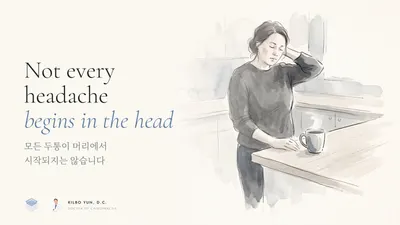
Earlier: Not every headache begins in the head · 모든 두통이 머리에서 시작되지는 않습니다
Each headache has its own pattern
두통은 종류마다 나타나는 모습이 달라요
Headache specialists sort headaches by pattern: how long an attack lasts, where it sits, what it feels like, and what comes with it. Here is that system in plain words.
두통 전문가들은 두통을 나타나는 모습에 따라 나눠요. 한 번에 얼마나 가는지, 어디가 아픈지, 어떤 느낌인지, 무엇이 함께 오는지요. 그 기준을 쉬운 말로 옮겨 볼게요.
Migraine without aura. Attacks last 4 to 72 hours. The pain is often on one side, throbbing, moderate to severe, and gets worse when you move around, so you want to lie still. It comes with nausea, or with light and sound both feeling too much. Migraine is common, about one in seven people worldwide, and more common in women.
조짐 없는 편두통. 한 번 오면 4시간에서 72시간 가요. 흔히 한쪽이 욱신거리고, 중간 이상으로 아프고, 움직이면 더 심해져서 가만히 눕고 싶어져요. 메스꺼움이 함께 오거나, 빛과 소리가 둘 다 견디기 힘들어져요. 편두통은 흔해요. 세계적으로 일곱 명 중 한 명꼴이고, 여성에게 더 많아요.
Migraine with aura. About a third of people with migraine also get an aura. It's a short change that spreads slowly over several minutes, lasts from 5 minutes to an hour, and then clears completely: zigzag lines, a shimmering blind spot, tingling that travels up a hand to the face, or trouble finding words. The headache usually follows within the hour.
조짐 있는 편두통. 편두통이 있는 분의 3분의 1쯤은 조짐(aura)도 겪어요. 몇 분에 걸쳐 천천히 번지고, 5분에서 1시간쯤 이어지다가 깨끗이 사라져요. 눈앞에 지그재그 선이나 반짝이는 빈 자리가 보이거나, 손에서 얼굴로 저림이 타고 올라오거나, 말이 잘 떠오르지 않기도 해요. 두통은 대개 그 뒤 한 시간 안에 따라와요.
Before the headache. Migraine often announces itself hours, or even a day or two, ahead: unusual tiredness, yawning, thirst, a change in mood, poor sleep, or light starting to bother you. These signs point to the hypothalamus, the part of the brain that runs sleep, hormones and water balance. Once the attack starts, the trigeminal nerve, which carries feeling from the face, the scalp and the coverings of the brain, becomes sensitized. Its threshold drops, so coughing, bending over or ordinary light can hurt. That's why anything that keeps feeding this same nerve pathway, like a tired jaw or a stiff upper neck, deserves attention.
두통이 오기 전. 편두통은 몇 시간 전, 길게는 하루 이틀 전부터 신호를 보내는 경우가 많아요. 유난히 피곤하거나, 하품이 잦거나, 목이 마르거나, 기분이 달라지거나, 잠을 설치거나, 빛이 거슬리기 시작해요. 이런 신호는 잠과 호르몬, 몸의 수분을 조절하는 뇌의 시상하부와 관련이 있어요. 두통이 시작되면 얼굴과 두피, 뇌를 감싼 막의 감각을 맡는 삼차신경이 예민해져요. 통증을 느끼는 문턱이 낮아져서 기침을 하거나 몸을 숙이거나 평범한 불빛만 봐도 아플 수 있어요. 그래서 이 신경 길에 계속 자극을 보내는 지친 턱이나 굳은 위쪽 목도 그냥 넘기면 안 돼요.
Tension-type headache. A pressing or tight band, usually on both sides, mild to moderate. Walking or climbing stairs doesn't make it worse, and there's no nausea. It's the most common headache of all. The muscles around the skull, neck and shoulders are often tight and tender to the touch, and when the headache keeps coming back, the nervous system can grow more sensitive and turn the pain up. On 15 or more days a month, it's called chronic.
긴장형 두통. 대개 양쪽을 누르거나 조이는 띠 같은 두통이에요. 가볍거나 중간 정도로 아파요. 걷거나 계단을 올라도 더 심해지지 않고, 메스꺼움도 없어요. 모든 두통 가운데 가장 흔해요. 머리와 목, 어깨 둘레 근육이 뭉쳐 있고 누르면 아픈 경우가 많아요. 두통이 자꾸 반복되면 신경계가 예민해져서 통증을 더 크게 느끼게 될 수도 있어요. 한 달에 15일 이상 오면 만성이라고 해요.
Cluster headache. Rare, about one person in a thousand, and among the most severe pains people describe. It sits in and around one eye or the temple, always the same side, and lasts 15 minutes to 3 hours. On that same side the eye waters or reddens, the nose runs or blocks, or the eyelid droops. People can't sit still with it; they pace. Attacks come in bouts of weeks, often at the same hour of the day or night, then disappear for months.
군발두통. 천 명에 한 명꼴로 드물지만, 사람이 겪는 통증 가운데 가장 심한 편에 속해요. 늘 같은 쪽 눈 주위나 관자놀이가 아프고, 15분에서 3시간 가요. 같은 쪽 눈이 충혈되거나 눈물이 나고, 콧물이 나거나 코가 막히고, 눈꺼풀이 처지기도 해요. 가만히 있지 못하고 서성이게 돼요. 몇 주씩 몰려서 오는데, 하루 중 같은 시각, 특히 밤에 오는 경우가 많고, 그러다 몇 달씩 잠잠해져요.
Headache from the neck (cervicogenic). It starts with a problem in the neck. The neck turns less than it should, and certain neck positions or pressure on the upper neck bring the headache on or make it worse. It's usually on one side and doesn't switch sides. It doesn't need an injury. Wear and tear, a joint that moves too much or too little, tight muscles or a long-held posture can be enough. And an X-ray or MRI is often normal, because the problem is in how the joints and muscles move, which a picture can't show. So it's found by listening closely and examining by hand, and it's why many people carry the label "migraine" for years before anyone checks their neck.
목에서 오는 두통(경추성 두통). 목에 생긴 문제에서 시작돼요. 목이 돌아가야 할 만큼 돌아가지 않고, 어떤 자세를 하거나 위쪽 목을 누르면 두통이 생기거나 심해져요. 대개 한쪽만 아프고, 아픈 쪽이 바뀌지 않아요. 꼭 다쳐야 생기는 건 아니에요. 나이 들며 생기는 관절 변화, 너무 많이 또는 너무 적게 움직이는 관절, 뭉친 근육, 오래된 자세 습관만으로도 생길 수 있어요. 엑스레이나 MRI는 정상으로 나오는 경우가 많아요. 문제가 관절과 근육이 움직이는 방식에 있어서 사진에는 잘 안 잡히거든요. 그래서 이야기를 자세히 듣고 손으로 직접 검사해서 가려내요. 몇 년씩 "편두통"이라는 이름으로 지내다가 그제야 목을 검사받는 분이 많은 것도 이 때문이에요.
Headache from the jaw. It usually sits at the temple. It gets worse when you chew, talk a lot or clench, and pressing on the muscle at the side of your head brings on your familiar headache.
턱에서 오는 두통. 대개 관자놀이가 아파요. 씹거나 말을 많이 하거나 이를 악물면 심해지고, 머리 옆 근육을 누르면 평소 겪던 두통이 그대로 나타나요.
Many people have more than one. Migraine plus a neck or jaw headache on the days in between is common, and that is where a lot of "my headaches" come from.
두 가지 이상을 함께 겪는 분도 많아요. 편두통이 있으면서, 편두통이 없는 날에도 목이나 턱에서 오는 두통을 겪는 경우가 흔해요. 자주 머리가 아프다고 느끼는 날의 상당수가 여기서 나와요.
One meeting point for the head, the neck and the jaw
머리와 목과 턱의 신호가 만나는 곳
Pain from your face, jaw and forehead, and pain from the top three segments of your neck, are sent to the same small region at the top of the spinal cord. There the signals share the same nerve cells, so the brain can't always tell where they came from. A sore jaw muscle or a stiff upper neck can be felt as a headache at the temple or behind the eye. We wrote about the neck side of this in Not every headache begins in the head. This time, the jaw.
얼굴과 턱, 이마에서 오는 통증 신호와 목 위쪽 세 마디에서 오는 통증 신호는 척수 맨 위의 같은 작은 구역으로 모여요. 거기서 같은 신경세포를 함께 쓰다 보니, 뇌가 신호가 어디서 왔는지 늘 정확히 가려내지는 못해요. 그래서 아픈 턱 근육이나 굳은 위쪽 목이 관자놀이나 눈 뒤의 두통으로 느껴질 수 있어요. 목 이야기는 모든 두통이 머리에서 시작되지는 않습니다에서 다뤘으니, 이번에는 턱 이야기를 해 볼게요.
Where the jaw comes in
턱은 어디서 끼어들까요
Put your fingertips on your temples and clench your teeth. The muscle that bulges under your fingers is the temporalis, one of your main chewing muscles. It fans out over the side of your head, right where many people feel their headache. The masseter, the thick muscle at the angle of your jaw, is the other. When these muscles are overworked, from clenching during the day, grinding at night, or holding the jaw tight under stress, their ache is often felt at the temple, the forehead or behind the eye.
손끝을 관자놀이에 대고 이를 꽉 물어 보세요. 손끝 아래에서 불룩 올라오는 근육이 측두근(temporalis)이에요. 씹을 때 쓰는 주요 근육 가운데 하나예요. 머리 옆을 부채처럼 덮고 있는데, 많은 분들이 두통을 느끼는 바로 그 자리예요. 다른 하나는 턱 모서리에 있는 두툼한 교근(masseter)이에요. 낮에 이를 악물거나, 밤에 이를 갈거나, 스트레스를 받을 때 턱에 힘을 주고 있으면 이 근육들이 지쳐요. 그 뻐근함은 흔히 관자놀이나 이마, 눈 뒤에서 느껴져요.
This link has been studied. Pooling studies from several countries, people with migraine were close to four times as likely to have a painful jaw problem as people without headache, and the same held for tension-type headache. The link was with painful, muscle-type jaw problems. A joint that clicks without pain was not linked to headache.
이 연결은 연구로도 확인됐어요. 여러 나라 연구를 모아 보니, 편두통이 있는 사람은 두통이 없는 사람보다 턱 통증이 있을 가능성이 네 배 가까이 높았고, 긴장형 두통도 마찬가지였어요. 관련이 있었던 건 턱 근육의 통증이었어요. 아프지 않게 딸깍거리기만 하는 턱관절은 두통과 관련이 없었어요.
It also seems to run both ways. A large study followed more than two thousand adults without jaw pain for about three years. Those who had migraine at the start were more likely to develop a painful jaw problem, and once the jaw problem began, their headaches became more frequent. A tired jaw can keep feeding a headache system that is already sensitive, and frequent headaches can keep the jaw braced.
이 관계는 한쪽으로만 가지 않는 것 같아요. 턱 통증이 없던 성인 2천여 명을 3년쯤 따라간 큰 연구가 있어요. 처음에 편두통이 있던 사람은 나중에 턱 통증이 새로 생길 가능성이 더 높았고, 턱 통증이 생긴 뒤에는 두통이 더 잦아졌어요. 지친 턱 근육은 이미 예민해진 신경을 계속 자극하고, 잦은 두통은 턱을 계속 굳어 있게 만들 수 있어요.
When the jaw and the neck share the work
턱과 목은 일을 나눠서 해요
Open your mouth slowly and you'll notice something: your head tips back a little at the same time. That's normal. Studies that tracked the jaw and head together found the head extends a little with every opening and comes forward again as the mouth closes, in everyone, every time. The jaw and the top of the neck work as one team.
입을 천천히 벌려 보세요. 그와 동시에 머리가 살짝 뒤로 젖혀지는 게 느껴질 거예요. 정상이에요. 턱과 머리의 움직임을 함께 기록한 연구들에서, 입을 벌릴 때마다 머리가 조금 뒤로 젖혀지고 다물 때 다시 앞으로 돌아왔어요. 누구나, 매번이요. 턱과 목 맨 위는 한 팀으로 일해요.
In chiropractic terms, the trouble starts when the balance between the two shifts. When the head sits forward of the shoulders, or the neck has lost its gentle curve, we often see the opening lean more on the skull tipping back at the top of the neck, and less on the jaw dropping freely. Every bite, every yawn, every sentence then asks a little more of the small muscles between the skull and the first two vertebrae, the suboccipitals. They stay short and busy all day.
카이로프랙틱으로 보면, 문제는 이 둘이 나눠 맡는 몫이 달라질 때 시작돼요. 머리가 어깨보다 앞으로 나와 있거나 목의 완만한 곡선이 펴져 일자목이 되면, 입을 벌리는 움직임이 아래턱이 자유롭게 내려가는 쪽보다 목 맨 위에서 두개골을 뒤로 젖히는 쪽에 더 기대는 경우를 자주 봐요. 그러면 씹을 때마다, 하품할 때마다, 말할 때마다 두개골과 첫째·둘째 목뼈 사이의 작은 근육들, 후두하근(suboccipital muscles)이 조금씩 더 일해야 해요. 이 근육들이 하루 종일 짧게 수축한 채 쉬지 못하는 거예요.
That small space matters. The first neck nerves pass through it, and the greater occipital nerve, which carries feeling from the back of the head up toward the crown, comes out right beside these muscles. When they stay tight, the back of the head and the base of the skull are often where people feel it. In studies of people with frequent tension-type headaches, those whose heads sat further forward tended to have more headache days, and tender, active spots in the suboccipital muscles were common in people with headaches and absent in people without them.
그 좁은 자리가 중요해요. 첫 번째 목신경이 그곳을 지나가고, 뒷머리에서 정수리 쪽으로 감각을 맡는 큰뒤통수신경(greater occipital nerve)이 바로 이 근육들 곁으로 나와요. 이 근육들이 계속 뭉쳐 있으면 뒷머리와 두개골 밑이 아프다고 느끼는 경우가 많아요. 긴장형 두통이 잦은 사람들을 살펴본 연구들에서, 머리가 앞으로 더 나와 있는 사람일수록 두통이 있는 날이 많았어요. 그리고 후두하근의 눌러서 아픈 지점은 두통이 있는 사람들에게 흔했고, 두통이 없는 사람들에게는 없었어요.
The bony landmarks around it tell the same story. The mastoid process, the bump behind your ear, is where the sternocleidomastoid, the long muscle down the front of your neck, holds on to the skull. The first neck vertebra is where the levator scapulae, the muscle that lifts your shoulder blade, begins. A forward head and raised, tense shoulders pull on exactly the place where the jaw, the skull and the neck meet.
주변 뼈를 보면 더 분명해져요. 귀 뒤에 볼록한 꼭지돌기(mastoid process)는 목 앞쪽을 길게 내려가는 흉쇄유돌근(sternocleidomastoid)이 두개골을 붙잡는 자리예요. 첫째 목뼈는 어깨뼈를 들어 올리는 견갑거근(levator scapulae)이 시작되는 자리고요. 머리가 앞으로 나오고 어깨가 긴장해서 올라가 있으면, 턱과 두개골과 목이 만나는 바로 그 자리가 당겨져요.
And the jaw itself doesn't have to hurt. The body is good at sharing work. Your nervous system does this on purpose: when one muscle can't meet a demand, the brain calls in others, the way you brace your legs, belly and back to pull open a heavy door. A jaw joint or chewing muscle that isn't moving well can stay quiet for years while the neck, the temples or the base of the skull quietly take over part of its job, and those are the places that end up complaining. That's why we check the jaw even when it feels fine, and the neck even when the pain is in the jaw.
그리고 턱 자체는 아프지 않을 수도 있어요. 몸은 일을 나눠 맡는 데 능숙해요. 신경계가 일부러 그렇게 해요. 한 근육으로 감당이 안 되면 뇌는 다른 근육을 불러 도움을 받아요. 무거운 문을 당길 때 팔만이 아니라 다리와 배, 등까지 힘을 주는 것처럼요. 턱관절이나 씹는 근육에 문제가 있어도 몇 년씩 아무 느낌이 없을 수 있어요. 그동안 목이나 관자놀이, 두개골 밑이 그 일을 조금씩 대신 떠맡고, 결국 아픈 건 그쪽이 돼요. 그래서 저희는 턱이 멀쩡하다고 느끼셔도 턱을 보고, 아픈 데가 턱이어도 목을 함께 봐요.
What neck pain during a migraine means
편두통 때 목이 아프다면
Many people with migraine say "it starts in my neck." Neck pain is very common in migraine. In one study, about seven in ten people felt neck pain during their attacks, and in most of them it began together with the headache, not before. That doesn't make every migraine a neck problem. It means the neck is part of how many migraines are felt.
편두통이 있는 분들이 "목에서 시작돼요"라고 많이 말씀하세요. 편두통 때 목이 아픈 건 아주 흔해요. 한 연구에서는 열 명 중 일곱 명쯤이 발작 중에 목이 아팠고, 대부분은 두통보다 먼저가 아니라 두통과 함께 시작됐어요. 그렇다고 모든 편두통이 목 문제라는 뜻은 아니에요. 편두통이 오면 목도 함께 아픈 경우가 많다는 뜻이에요.
So we don't stop at asking whether your neck hurts. We test it on a day you don't have a headache: how far it turns, how each upper segment moves, and whether pressing a particular joint brings on your usual headache. If it does, the neck is part of your story. If it doesn't, we keep looking, and we tell you so.
그래서 저희는 목이 아프냐고 묻는 데서 멈추지 않아요. 두통이 없는 날 직접 검사해요. 목이 얼마나 돌아가는지, 위쪽 마디 하나하나가 어떻게 움직이는지, 특정 관절을 누르면 평소 겪던 두통이 나타나는지요. 나타나면 목이 그 두통의 원인 가운데 하나예요. 나타나지 않으면 다른 곳을 계속 찾고, 그 사실도 그대로 말씀드려요.
What chiropractic care can do
카이로프랙틱이 할 수 있는 일
For headaches that start in the neck, the research is encouraging. In a well-known randomized trial, people with neck-related headaches who had manipulative therapy, specific neck exercises, or both had fewer and milder headaches than those who didn't, and the difference was still there a year later. A more recent randomized trial found that spinal manipulation reduced headache days compared with a light massage. Chiropractic guidelines list manipulation as an option for this kind of headache.
목에서 시작되는 두통은 연구 결과가 고무적이에요. 잘 알려진 무작위 연구에서, 목에서 오는 두통이 있는 사람들이 손으로 하는 교정 치료나 목 운동, 또는 둘 다를 받았더니 받지 않은 사람들보다 두통이 덜 자주, 덜 세게 왔고, 그 차이가 1년 뒤에도 남아 있었어요. 더 최근의 무작위 연구에서도 척추 교정이 가벼운 마사지보다 두통이 있는 날을 줄였어요. 카이로프랙틱 진료지침도 이런 두통에 교정을 권하고 있어요.
Spine surgeons describe the same order of care. For a headache that comes from the neck, the usual path starts with hands-on, conservative care, such as manual therapy, posture retraining, neck stabilizing exercise, trigger point work and chiropractic care. Injections come after that, and surgery is kept for specific problems that need it. For tension-type headache, medical teaching also lists chiropractic care, physical therapy and massage among the options that don't rely on medication.
척추 수술을 하는 의사들도 같은 순서를 말해요. 목에서 오는 두통은 손으로 하는 치료, 자세 교정, 목을 안정시키는 운동, 뭉친 근육 풀기, 카이로프랙틱 같은 보존적 치료부터 시작해요. 주사는 그다음이고, 수술은 꼭 필요한 특정 문제에만 남겨 둬요. 긴장형 두통에서도 의학 교육 자료는 카이로프랙틱과 물리치료, 마사지를 약에 기대지 않는 방법으로 꼽아요.
Migraine and cluster headache are different. They begin in the brain's own pain system, and no adjustment switches that off. What we can work on is what adds to it: a stiff upper neck, overworked jaw muscles, a clenching habit, a breath that sits high in the chest and keeps the neck muscles busy. Some people find their migraine days easier when those pieces settle.
편두통과 군발두통은 달라요. 뇌의 통증 조절 기능 자체에서 시작되기 때문에, 교정으로 멈출 수 있는 두통은 아니에요. 저희가 다룰 수 있는 건 두통을 더 자주, 더 세게 만드는 요인들이에요. 굳은 위쪽 목, 지친 턱 근육, 이를 악무는 버릇, 가슴으로만 얕게 쉬어서 목 근육을 계속 쓰게 만드는 호흡이요. 이런 부분들이 가라앉으면 편두통이 오는 날도 한결 수월해졌다는 분들이 있어요.
What a visit at Levitas looks like
Levitas에서는 이렇게 봐요
We take our time. We ask where the headache sits, how long it lasts, what comes with it, what time of day it starts, what you've already tried, and whether your jaw is tired in the morning. If you keep a headache diary, bring it. We watch how you hold your head and how you breathe. We check the upper neck by hand, segment by segment, and see whether pressing a joint brings on your usual headache. We watch how your jaw opens, whether it drifts to one side, and whether your head tips back to do the work, and we press on the temporalis, the masseter and the muscles at the base of the skull to see whether they reproduce the pain.
저희는 서두르지 않아요. 두통이 어디에 오는지, 얼마나 가는지, 무엇이 함께 오는지, 하루 중 언제 시작되는지, 이미 해 본 건 무엇인지, 아침에 턱이 피곤한지 여쭤봐요. 두통 일기를 쓰고 계시면 가져와 주세요. 고개를 어떻게 두고 있는지, 숨을 어떻게 쉬는지 봐요. 위쪽 목을 손으로 한 마디씩 짚고, 관절을 눌렀을 때 평소 겪던 두통이 나타나는지 봐요. 입이 어떻게 벌어지는지, 한쪽으로 쏠리지는 않는지, 아래턱 대신 머리가 젖혀지며 입을 벌리지는 않는지 보고, 측두근과 교근, 두개골 밑 근육을 눌러 평소 두통이 그대로 나타나는지도 확인해요.
Then the work runs in order. If something hurts, we get that down first. Then we restore motion: the stiff upper neck segments are adjusted, and the jaw and neck muscles are released by hand. Then we teach the pattern: where your jaw rests, how to nod from the top of the neck, and a breath that lets the neck muscles rest. Then we build strength, so the deep neck muscles hold the change while you work at a screen or drive. Muscles only get stronger when they're asked to do a little more than they're used to, and they rebuild during rest and sleep, so we raise the challenge step by step. Last comes keeping it, a few minutes a day at home.
그다음은 순서대로 가요. 통증부터 가라앉혀요. 그다음 굳은 움직임을 되살려요. 굳은 위쪽 목 마디를 교정하고, 턱과 목 근육을 손으로 풀어요. 그리고 패턴을 가르쳐요. 턱이 쉬는 자리, 목 맨 위에서 고개를 끄덕이는 법, 목 근육이 쉴 수 있는 호흡법이요. 그다음 힘을 길러요. 화면 앞에서 일하거나 운전할 때도 깊은 목 근육이 바른 자세를 유지할 수 있게요. 근육은 익숙한 것보다 조금 더 많은 일을 할 때 강해지고, 쉬고 자는 동안 회복하면서 자라요. 그래서 조금씩 단계를 올려요. 마지막으로 집에서 하루 몇 분씩 이어 가시면 돼요.
Who comes in for this
이런 분들이 오세요
People who wake with a headache and a tired jaw. People whose partner hears them grind at night. People with migraine who also have "the other headache" on the days in between. Desk workers whose headache builds through the afternoon, starting at the base of the skull. People who chew gum or clench through a stressful day and feel it at the temples by evening. And anyone who has been told "it's just tension" and would like someone to look at the neck and jaw properly.
아침에 두통과 함께 턱이 피곤한 채로 일어나는 분. 밤에 이 가는 소리를 들었다는 말을 듣는 분. 편두통이 있으면서, 편두통이 없는 날에도 다른 두통을 겪는 분. 오후로 갈수록 뒷머리 밑에서부터 두통이 올라오는 사무직 분. 스트레스 받는 날 껌을 씹거나 이를 악물고 지내다가 저녁이면 관자놀이가 아픈 분. 그리고 "긴장성 두통"이라는 말만 듣고, 목과 턱은 한 번도 제대로 검사받지 못한 분이요.
What we'll have you do tonight
오늘 밤 해 보실 것
Find your jaw's resting place. Lips together, teeth apart, tongue resting on the roof of your mouth just behind your front teeth. That's where your jaw should spend most of the day. Check it every time you look at your phone.
턱이 쉬는 자리 찾기. 입술은 닫고, 이는 떼고, 혀는 앞니 바로 뒤 입천장에 가볍게 붙여요. 하루 대부분 턱은 이 자리에 있어야 해요. 휴대폰을 볼 때마다 한 번씩 확인해 보세요.
Soften the temples. Place your fingertips on your temples, let your jaw drop slightly open, and make slow small circles for a minute. Then do the same on the masseter, at the angle of your jaw.
관자놀이 풀기. 손끝을 관자놀이에 대고, 턱을 살짝 벌린 채 1분 동안 작은 원을 천천히 그려요. 그다음 턱 모서리의 교근도 똑같이 해요.
Nod from the top. Lie on your back with your head on a thin pillow. Without lifting your head, make a small, slow "yes" nod, as if your chin is drawing toward your throat. Hold for a slow breath, then relax. Ten times. You should feel it deep at the front of the neck, not in the big muscles at the sides.
목 맨 위에서 끄덕이기. 얇은 베개를 베고 똑바로 누워요. 머리를 들지 말고, 턱을 목 쪽으로 당기듯 작고 천천히 "네" 하고 끄덕여요. 천천히 한 번 숨 쉬는 동안 머물렀다가 풀어요. 열 번이요. 목 옆의 큰 근육이 아니라 목 앞쪽 깊은 곳에서 느껴져야 해요.
Open with a still head. Sit tall and rest two fingertips lightly on your chin to notice movement. Let your jaw drop slowly, as if letting it hang, without tipping your head back. Open only as far as you can while the head stays still, then close. Five slow times.
머리는 두고 입만 벌리기. 허리를 펴고 앉아 두 손끝을 턱에 가볍게 대요. 머리를 뒤로 젖히지 말고, 턱을 툭 늘어뜨리듯 천천히 입을 벌려요. 머리가 움직이지 않는 데까지만 벌렸다가 다물어요. 천천히 다섯 번이요.
Start a headache diary. For the next few weeks, write down each headache: when it started, where it sat, how long it lasted, what came with it, and whether your jaw or neck was sore. It's the most useful thing you can bring to your first visit.
두통 일기 시작하기. 앞으로 몇 주 동안 두통이 올 때마다 적어 보세요. 언제 시작됐는지, 어디가 아팠는지, 얼마나 갔는지, 무엇이 함께 왔는지, 턱이나 목이 아팠는지요. 첫 방문 때 가져오실 수 있는 가장 쓸모 있는 자료예요.
If the jaw won't stay at rest for even a minute, or the nod pulls in the sides of your neck no matter how gently you go, that's the part we look at.
턱이 1분도 쉬는 자리에 머물지 못하거나, 아무리 살살 해도 끄덕일 때 목 옆이 당긴다면, 바로 그 부분을 저희가 살펴봐 드려요.
Before anything else, we check
무엇보다 먼저, 확인부터 해요
Your first visit starts with questions before any treatment. Most headaches follow the patterns above, but a few need a different plan, and they have signs. Did it come on suddenly, reaching its worst within a minute? Is it new after age 50, or very different from your usual headaches, or steadily getting worse? Over 50, does your jaw ache when you chew, and is the scalp at your temple sore to touch? Is there fever, weight loss, weakness, numbness, trouble speaking, confusion, or a change in vision that doesn't clear? Did it start after a fall or a blow to the head? Is it set off by coughing, sneezing or straining, or does it change sharply when you lie down or stand up? Are you pregnant or recently gave birth? Any of these changes the plan, and we'll tell you so plainly.
첫 방문은 치료보다 질문부터 해요. 대부분의 두통은 위에서 말한 모습을 따르지만, 몇몇은 진료 방향이 달라져야 하고, 그런 두통에는 신호가 있어요. 갑자기 시작해서 1분 안에 가장 심해졌는지. 50세 넘어 처음 생긴 두통인지, 평소 두통과 아주 다른지, 점점 심해지고 있는지. 50세 넘어 씹을 때 턱이 아프고, 관자놀이 쪽 두피를 만지면 아픈지. 열, 체중 감소, 힘 빠짐, 저림, 말이 어눌해짐, 헷갈림, 사라지지 않는 시야 변화가 있는지. 넘어지거나 머리를 부딪친 뒤에 시작됐는지. 기침이나 재채기, 힘줄 때 생기는지, 눕거나 일어설 때 확 달라지는지. 임신 중이거나 출산한 지 얼마 안 됐는지요. 이 가운데 하나라도 있으면 진료 방향이 달라지고, 그럴 땐 분명하게 말씀드려요.
A note before you go
마지막으로
Most people with frequent headaches have learned to live around them: the dark room, the pills in every bag, the plans that get cancelled. You don't have to keep calling all of it "my headaches." Come in, and let's find out which ones you have, and how much of them comes from your neck and your jaw.
두통이 잦은 분들은 대개 두통에 맞춰 사는 데 익숙해져 있어요. 어두운 방, 가방마다 넣어 둔 약, 취소되는 약속들이요. 그냥 참고 지내실 필요는 없어요. 한번 들러 주세요. 어떤 두통을 겪고 계신지, 그중 얼마만큼이 목과 턱에서 오는지 함께 찾아봐요.
Thanks for reading. Questions are welcome by phone or email. We answer every one.
읽어 주셔서 고마워요. 궁금한 건 전화나 이메일로 편하게 물어보세요. 하나하나 답해 드릴게요.
View the full brochure · 브로셔 전체 보기