Quick answer · 짧은 답
Ankle pain that lasts for weeks is often an injury that keeps getting restarted by a leg that has drifted out of line, not just a problem in the ankle itself.
몇 주씩 가는 발목 통증은 발목만의 문제라기보다, 줄이 어긋난 다리 때문에 계속 다시 시작되는 손상인 경우가 많아요.
You've had it treated. You've soaked it, iced it, stretched it every single day. And still, the ankle won't let you do the thing you care about, whether that's a rehearsal, a match, a long shift on your feet, or just a walk that doesn't end in an ache. If that sounds familiar, the frustration makes sense. So does the worry. You're doing everything you've been told, and it isn't working.
치료도 받아 보고, 족욕도 하고, 얼음도 대고, 스트레칭도 매일 빠짐없이 하셨을 겁니다. 그런데도 발목 때문에 정작 하고 싶은 일을 마음껏 못 하고 계시지요. 연습이든, 경기든, 하루 종일 서서 일하는 날이든, 끝나고 나서 욱신거리지 않는 산책 한 번이든요. 들은 대로 다 하고 있는데 나아지지 않으니, 답답하고 초조한 마음이 드는 게 당연합니다.
This post is for you. It's long, because the honest answer is. Here it is in one line: the ankle is usually where a problem shows up, not where it starts. Let's walk through why, from inside the ankle up to the hip and back down to what actually helps.
이 글은 그런 분들을 위해 썼습니다. 제대로 답하려니 글이 조금 길어졌습니다. 한 줄로 먼저 말씀드리면 이렇습니다. 발목은 대개 문제가 시작된 곳이 아니라, 문제가 드러난 곳입니다. 왜 그런지 발목 안에서 시작해 골반까지 올라가 보고, 무엇이 실제로 도움이 되는지까지 차근차근 짚어 보겠습니다.
1. The heat is your body repairing
1. 그 열은 몸이 고치고 있다는 신호입니다
The night after an ankle goes wrong, it's hot and tight, and by morning it's wider than the other one. It's natural to read that as damage. It's closer to the start of repair. Blood rushes in, fluid follows, and with it come the cells that clear out torn fibers and call in the rebuilding crew. That redness, warmth and swelling is inflammation, and without it a strained ligament or tendon would never heal.
발목을 다친 날 밤, 뜨겁고 땡땡하다가 다음 날 아침엔 반대쪽보다 굵어져 있지요. 덜컥 겁이 나는 게 당연합니다. 그런데 그 모습은 망가졌다는 신호라기보다 고치기 시작했다는 신호에 가깝습니다. 피가 몰리고 체액이 따라 들어오면서, 찢어진 섬유를 치우는 세포들과 새 조직을 지을 일꾼을 부르는 신호가 함께 실려 옵니다. 붉어지고 뜨겁고 붓는 것, 그것이 염증이고, 염증이 없다면 늘어난 ligament도 tendon도 아물지 못합니다.
Left to run its course, it switches itself off. Think of a paper cut. A little red, a little sore, and a few days later it's gone.
제대로 흘러가기만 하면 염증은 스스로 꺼집니다. 종이에 베인 손가락을 떠올려 보세요. 살짝 붉고 욱신거리다가 며칠 지나면 아뭅니다.
2. Why it won't switch off
2. 그런데 왜 꺼지지 않을까요
Because most of us can't give it those few days. The ankle is half repaired, and the next rehearsal, match or workday loads it again. Cleanup starts over. Rebuilding never gets its turn. It's like putting up wallpaper and tearing it down before the paste dries, again and again for a month.
대부분 몸에 그 며칠의 여유를 주기 어렵기 때문입니다. 발목이 반쯤 회복됐을 즈음, 다음 연습이나 경기, 출근길에 또 체중이 실립니다. 청소는 처음부터 다시 시작되고, 새로 짓는 작업은 차례가 오지 않지요. 벽지를 바르다가 마르기도 전에 뜯고 또 바르는 공사를 한 달째 이어 가는 셈입니다.
And inflammation that lingers starts to cost something. The cells that rushed in are built to break things down. Aimed at debris, that's exactly right. Left on site for weeks, they start damaging the healthy tissue next door, like firefighters who keep spraying long after the fire is out. Trapped swelling adds to it, pressing on the small vessels that bring oxygen in. Heat that never quite leaves is the sign that the crew never left either.
이 상태가 길어지면 대가가 따릅니다. 몰려온 세포들은 원래 부수는 일을 맡은 세포들이라, 잔해를 향할 때는 꼭 필요하지만 몇 주씩 머물면 옆의 멀쩡한 조직까지 상하게 합니다. 불이 다 꺼진 뒤에도 남아서 물대포를 쏘는 소방관처럼요. 빠져나가지 못한 부기도 산소를 실어 오는 작은 혈관을 눌러 상황을 더 나쁘게 만듭니다. 열감이 좀처럼 빠지지 않는다는 건, 그 소방관이 아직 나가지 않았다는 뜻입니다.
3. Ice, heat, and that nightly foot soak
3. 얼음, 찜질, 그리고 매일 하시는 족욕
In the first days after an injury, ice. Cold narrows the vessels so less fluid floods in, slows the nerves carrying pain, and lowers how much oxygen nearby cells need while they're under pressure.
다치고 처음 며칠은 얼음입니다. 차가워지면 혈관이 좁아져 체액이 덜 밀려들고, 통증을 전하는 신경이 느려지고, 부기에 눌린 주변 세포들이 산소를 덜 쓰게 되어 버틸 여유가 생깁니다.
Heat does the opposite. A heat pack, a long hot shower, or a warm foot soak opens the vessels wider and pours more fluid into a joint that's already full. We know a warm soak at the end of the day feels like comfort, and that matters. But while there's still swelling or warmth in the ankle, it's worth pausing. Heat has its place later, once the swelling is gone and stiffness is what's left.
따뜻하게 하면 정반대 일이 일어납니다. 핫팩이든, 뜨거운 샤워든, 따뜻한 족욕이든 혈관을 더 넓혀 이미 꽉 찬 관절에 체액을 더 붓습니다. 하루를 마치고 발을 담그는 시간이 위안이라는 것도 잘 압니다. 다만 발목에 붓기나 열감이 남아 있는 동안에는 잠시 쉬어 두시는 게 좋습니다. 찜질이 맞는 때는 부기가 빠지고 뻣뻣함만 남았을 때입니다.
When the ice comes off, the body notices the cold and sends warm blood back to rewarm the area. That's why ice works in short rounds.
얼음을 떼면 몸은 차가워진 걸 알아차리고 따뜻한 피를 다시 보내 데웁니다. 그래서 얼음은 짧게 끊어서 댑니다.
Ice, the short version · 얼음, 이것만 기억하세요
First days after an injury: ice, not heat. · 다치고 처음 며칠은 찜질 대신 얼음.
10 to 15 minutes, a thin towel between ice and skin, ankle above your heart. · 10~15분, 얇은 수건 한 장, 발은 심장보다 높게.
Let it rewarm fully before the next round. Never past 20 minutes. · 완전히 따뜻해진 뒤에 다음 차례. 20분은 넘기지 않기.
Never right before you dance, play or train. · 운동이나 연습 직전에는 대지 않기.
A month in, ice moves to the back seat. The real question becomes what keeps restarting the injury. That answer is rarely in the ankle.
다만 한 달이 지났다면 얼음만으로는 부족합니다. 정말 따져 봐야 할 것은 무엇이 자꾸 손상을 되풀이하게 만드느냐이고, 그 답은 대개 발목에 있지 않습니다.
4. The position your ankle lives in all day
4. 하루 중 발목이 가장 오래 머무는 자세
Look down at your feet while you sit. Heeled shoes, feet tucked under the chair, legs crossed. In nearly all of those, the top of the foot is stretched long and the toes point down, the way your foot looks when you rise onto tiptoe or wear high heels. That position is called plantarflexion. Spend most of the day in it and the calf stays short and tight while the muscles on the front of the shin sit long and idle.
앉아 계실 때 발을 한번 내려다보세요. 굽 있는 신발, 의자 밑으로 넣은 발, 꼰 다리. 거의 모든 자세에서 까치발을 들 때처럼, 하이힐을 신었을 때처럼 발등이 쭉 펴진 상태입니다. 이것을 plantarflexion이라고 합니다. 하루 대부분을 이 상태로 지내면 종아리는 짧아진 채 뻣뻣해지고, 정강이 앞쪽 근육은 늘어진 채 일을 쉬게 됩니다.
One of our patients, a man in his forties with a desk job and an evening badminton habit, put it the way many people do: "My body was fine, and then out of nowhere my ankle started hurting." (His story is pieced together from several people we've seen.) After months like that, the brain stops treating the position as a position and starts treating it as normal. From the inside, everything really did feel fine.
저희가 만나 온 환자분 중에, 낮에는 책상에 앉아 일하고 저녁엔 동호회 배드민턴을 치시는 40대 남성분이 계셨습니다(몇 분의 이야기를 한 분으로 엮었습니다). 많은 분들이 그렇듯 "몸은 멀쩡했는데 갑자기 발목이 아프기 시작했어요"라고 하셨지요. 몇 달을 그렇게 지내면 뇌는 그 자세를 하나의 자세가 아니라 정상으로 받아들입니다. 안에서 느끼기엔 정말 멀쩡했을 겁니다.
Walking asks the opposite. Every step, the muscle on the front of the shin has to contract hard to lift the foot, and as your body passes over it, the calf has to lengthen under control and let the shin travel forward, like easing off a brake on a downhill. Folding the ankle that way, top of the foot drawing toward the shin, is dorsiflexion. Picture the ankle in a deep squat. It happens thousands of times a day on each side, and it isn't automatic. When it doesn't happen cleanly, the ankle still moves, but with one wall of protection missing. The ligaments and tendons take load the muscles should have taken, a little every step. Our badminton player was asking an ankle that had sat pointed for eight hours to lunge across a court a few hundred times every evening.
그런데 걸을 때는 정반대의 움직임이 필요합니다. 한 걸음마다 정강이 앞 근육이 힘껏 수축해 앞발을 들어 올려야 하고, 몸이 디딘 발 위로 넘어갈 때는 종아리가 길어지면서 정강이를 천천히 앞으로 내보내야 합니다. 내리막길에서 브레이크를 살살 풀어 주듯이요. 이렇게 발등을 정강이 쪽으로 당겨 발목이 접히는 움직임이 dorsiflexion입니다. 쪼그려 앉을 때의 발목을 떠올리시면 됩니다. 한쪽 발에서만 하루 수천 번 반복되는데, 저절로 되는 일이 아닙니다. 이게 깔끔하게 안 되면 발목은 방어벽 하나가 빠진 채로 움직이고, 근육이 받아야 할 충격을 ligament와 tendon이 걸음마다 조금씩 대신 받습니다. 그 배드민턴 치시는 분은 여덟 시간 동안 발등을 편 채 앉아 있던 발목으로, 저녁마다 코트 위에서 몇백 번씩 런지를 하셨던 겁니다.
5. The ankle never hurts alone
5. 발목은 혼자 아프지 않습니다
The ankle is the bottom link of a chain that starts at the pelvis. The names may be new, and that's fine. What matters is what each one does.
발목은 골반에서 시작되는 사슬의 맨 아래 고리입니다. 이름이 낯설어도 괜찮습니다. 무슨 일을 하는지만 기억하시면 됩니다.
The pelvis anchors the chain. The hamstring on the outside of the thigh starts at the bone you sit on, so when the pelvis tips or twists, that muscle tightens or slackens before you take a step.
골반은 사슬이 걸린 고리입니다. 허벅지 뒤 바깥쪽 근육이 앉을 때 닿는 엉덩이뼈에서 시작하기 때문에, 골반이 기울거나 틀어지면 한 발짝 떼기도 전에 그 근육이 팽팽해지거나 느슨해집니다.
Biceps femoris, that outer hamstring, ends on a small knob just below the outside of the knee, the head of the fibula. When the knee is bent, it turns the lower leg outward.
그 바깥쪽 근육 biceps femoris는 무릎 바깥 아래의 작은 뼈 돌기, fibula head에 붙습니다. 무릎이 굽어 있을 때는 종아리를 바깥으로 돌립니다.
The fibula is the thin outer bone of the lower leg. Its bottom end is the bump on the outside of your ankle, the outer wall of the joint. Whatever pulls on its top is felt at its bottom.
Fibula는 종아리 바깥의 가는 뼈입니다. 아래 끝이 발목 바깥 복사뼈, 즉 관절의 바깥 벽이지요. 그래서 이 뼈의 위쪽을 잡아당기면 그 영향이 발목까지 내려옵니다.
Fibularis longus starts on the fibula, runs behind the outer ankle bone and crosses under the whole foot to the base of the big toe. Tibialis anterior runs down the front of the shin to almost the same spot from the inside. Pulling against each other like the two straps of a stirrup, they hold up your arch every time you stand.
Fibularis longus는 fibula에서 시작해 바깥 복사뼈 뒤로 돌아 발바닥을 가로질러 엄지발가락 뿌리에 붙습니다. Tibialis anterior는 정강이 앞을 타고 내려와 거의 같은 자리에 안쪽에서 붙고요. 이 둘이 등자의 양쪽 끈처럼 맞당기기 때문에, 서 있을 때마다 아치가 유지됩니다.
The talus, the small bone in the middle of the ankle, has no muscle of its own. It goes where everything around it takes it. It's also narrower at the back, so with the heel lifted, as in a heeled shoe, the bones hold less on their own and the stirrup muscles do the holding.
발목 한가운데 작은 뼈 talus에는 붙어 있는 근육이 하나도 없습니다. 주변이 끄는 대로 갈 뿐이지요. 게다가 뒤쪽이 좁아서, 굽 있는 신발처럼 뒤꿈치가 들리면 뼈끼리 붙잡는 힘이 약해지고 그 등자 근육들이 대신 붙잡습니다.
6. The pattern we see most often
6. 진료실에서 가장 자주 보는 모습
Most people who come in don't bring one problem. They bring a pattern. The pelvis tips forward. The thigh bone turns outward in the hip and pushes into the front of the joint, and the lower back often pays for it. The fibula, which should hold its own position while the shin bone turns, gets dragged outward with it, usually pulled by biceps femoris.
찾아오시는 분들 대부분은 문제 하나가 아니라 패턴을 갖고 오십니다. 골반은 앞으로 기울고, 허벅지뼈는 고관절 안에서 바깥으로 돌아 관절 앞쪽을 누르고, 그 부담은 종종 허리로 이어집니다. 정강이뼈가 돌 때 자기 자리를 지켜야 할 fibula는 대개 biceps femoris에 끌려 함께 바깥으로 돌아갑니다.
Now fibularis longus pulls from the wrong anchor and tibialis anterior loses its partner. Both weaken. With the thigh turned out above and the stirrup failing below, the body balances the only way left. It lets the arch drop and rolls weight onto the inside of the foot. That's pronation. As tibialis anterior weakens, the talus also tends to sit forward in its socket, and the ankle loses the ability to fold. You feel it as a pinch at the front of the ankle in a squat.
그러면 fibularis longus는 엉뚱한 자리에서 당기고, tibialis anterior는 짝을 잃습니다. 둘 다 약해지지요. 위에서는 허벅지가 바깥으로 돌아가 있고 아래서는 등자가 힘을 잃으니, 몸은 마지막 방법으로 아치를 내려놓고 체중을 발 안쪽으로 실어 버립니다. 이것이 pronation입니다. tibialis anterior가 약해지면 talus도 홈 안에서 앞으로 밀려 나와, 발목이 잘 접히지 않게 됩니다. 쪼그려 앉을 때 발목 앞이 끼이는 느낌이 바로 그것입니다.
Anything that keeps the knees slightly bent for long stretches, a heeled dance shoe, a low badminton stance, long hours on tired legs, gives biceps femoris its second job of turning the lower leg out. The fibula is dragged further, the stirrup weakens further, the arch drops a little more. No single link looks serious. Together they decide where your weight lands every step. The pain is in the ankle. The pattern is in the whole leg.
굽 있는 춤 신발, 낮게 버티는 배드민턴 자세, 지친 다리로 오래 서 있는 것처럼 무릎을 살짝 굽힌 채 오래 있게 만드는 것은 무엇이든 biceps femoris에게 종아리를 바깥으로 돌리는 일을 하나 더 맡깁니다. fibula는 더 끌려가고, 등자는 더 약해지고, 아치는 조금 더 내려앉습니다. 하나하나는 별것 아닌 듯 보여도, 한데 모이면 걸을 때마다 체중이 어디로 실릴지를 좌우합니다. 아픈 곳은 발목이지만, 패턴은 다리 전체에 있습니다.
7. When only the painful spot gets treated
7. 아픈 자리만 치료할 때 생기는 일
We're not saying the care you've had was wasted. But it helps to understand why things improve and then slide back.
그동안 받아 오신 치료가 헛되었다는 말씀이 아닙니다. 다만 왜 나아지는 듯하다가 다시 돌아오는지는 알아 두셨으면 합니다.
In this pattern, the pain usually shows up along the shin first, right over the two stirrup muscles. So that's where treatment goes: shockwave on the front of the shin, needles along the outside, cups over the muscle. Often nobody has first tested how those muscles fire or how the ankle and hip move. Those muscles aren't the cause. They're the ones holding the arch from a bad angle. Working them hard and repeatedly can leave them sore and less willing to contract for days. The pain may ease. Quieter pain isn't the same as a muscle that works. Our badminton player felt better after a few sessions on his shin, went straight back to the court, and was back two weeks later, worse.
이 패턴에서는 통증이 보통 정강이를 따라, 두 등자 근육 바로 위에서 먼저 나타납니다. 그러다 보니 치료도 자연스럽게 그쪽에 집중됩니다. 정강이 앞에 충격파, 바깥쪽에 침, 근육 위로 부항. 그 전에 이 근육들이 제대로 힘을 내는지, 발목과 고관절이 어떻게 움직이는지 검사해 본 경우는 생각보다 드뭅니다. 이 근육들은 원인이 아니라, 잘못된 각도에서 아치를 버티고 있는 쪽입니다. 세게, 자주 자극하면 며칠씩 뻐근하고 힘을 덜 쓰게 될 수 있지요. 통증은 줄어들 수 있습니다. 하지만 통증이 잠잠해진 것과 근육이 제 일을 하는 것은 다릅니다. 그 배드민턴 치시는 분도 정강이 치료 몇 번 뒤 나아진 기분에 바로 코트로 돌아가셨다가, 2주 만에 더 심해져서 오셨습니다.
The same rule applies to what we do, adjustments included. Without first testing what the muscle and joint can actually do, any treatment aimed at the spot that hurts is a guess.
이 원칙은 저희 치료에도 똑같이 적용됩니다. 교정도 마찬가지입니다. 근육과 관절이 실제로 무엇을 할 수 있는지 먼저 확인하지 않으면, 아픈 자리를 겨냥한 치료는 무엇이든 추측에 가깝습니다.
8. Stretching that works against you
8. 오히려 발목을 상하게 하는 스트레칭
If you've been stretching every day, that tells us you're willing to do the work. So we'll say this carefully. Pointing the foot hard, turning the sole in and rolling the ankle in big circles stretches tibialis anterior, the very muscle that's losing its grip. A muscle held long, over and over, gets longer and weaker.
매일 스트레칭을 하셨다면, 발목을 위해 할 수 있는 건 다 해 보려는 분이라는 뜻입니다. 그래서 조심스럽게 말씀드립니다. 발등을 힘껏 펴고, 발바닥을 안으로 돌리고, 발목을 크게 돌리면 정강이 앞 tibialis anterior가 늘어납니다. 이미 힘을 잃어 가는 바로 그 근육입니다. 자꾸 늘어난 상태로 있는 근육은 강해지기는커녕 늘어지고 약해집니다.
The bigger cost is at the talus. With the foot pointed and turned in, the bone is held mostly by the ligaments on the front and outside of the ankle, and that position pulls on exactly those ligaments. It's the same position the ankle is in when it sprains. Circle through it every day on an ankle already sitting forward, and the talus slowly drifts further out of place. More range, less control.
더 큰 손해는 talus에서 생깁니다. 발등을 펴고 안으로 돌린 자세에서는 뼈가 거의 발목 앞쪽과 바깥쪽 ligament에만 의지하는데, 그 자세가 바로 그 ligament를 잡아당깁니다. 발목을 삘 때의 자세와 똑같습니다. 이미 앞으로 나와 있는 발목으로 매일 그 자세를 돌면, talus는 조금씩 더 제자리를 벗어납니다. 움직이는 범위는 넓어지는데, 발목을 붙잡는 힘은 오히려 떨어집니다.
9. The parts that were holding on the whole time
9. 그동안 묵묵히 버텨 온 부분들
If you've read this far, you can probably see why all that effort didn't pay off. It wasn't that you didn't try hard enough. The effort was pointed in a slightly different direction. And the pain starts to look different, too. The shin muscles holding an arch from the wrong angle, the ligaments taking load meant for muscle, the talus jammed where it should glide. They weren't failing you. They were covering for something else, every step, for months.
여기까지 읽으셨다면, 그동안 열심히 했는데 왜 나아지지 않았는지 조금은 보이실 겁니다. 부족해서가 아니라, 방향이 조금 달랐을 뿐입니다. 통증도 다르게 보이실 거고요. 잘못된 각도로 아치를 붙잡던 정강이 근육들, 근육 몫의 충격을 대신 받아 온 ligament, 미끄러져야 할 자리에 끼여 있던 talus. 몸이 배신한 게 아닙니다. 몇 달 동안 걸음마다, 다른 곳의 빈자리를 묵묵히 메워 온 겁니다.
The work that helps starts small and starts in the right place. Pelvis level. Knee tracking over the second toe. Weight spread across the heel and the bases of the big and little toes. From there: lift the front of the foot slowly while the knee stays still, lower it more slowly, press the ball of the big toe into the floor without letting the arch fall. It can feel too small to matter, and ten minutes of it can be harder than an hour of training, because those muscles have been switched off for so long. But a strong movement built on a crooked start only teaches the crooked start to carry more weight.
도움이 되는 운동은 작게, 정확한 자리에서 시작합니다. 골반은 수평으로, 무릎은 둘째 발가락 위로, 체중은 뒤꿈치와 엄지·새끼발가락 뿌리에 고르게. 그 자리에서 무릎은 가만히 둔 채 앞발만 천천히 들고, 더 천천히 내리고, 아치가 무너지지 않게 엄지 쪽 발볼로 바닥을 누릅니다. 하나 마나 한 것처럼 느껴지는데, 10분만 해도 한 시간 운동보다 힘들 수 있습니다. 그 근육들이 그만큼 오래 쉬고 있었으니까요. 비뚤어진 출발점 위에 강한 동작부터 쌓으면, 비뚤어진 채로 더 무거운 걸 버티는 법만 몸에 익게 됩니다.
Once it starts, the pain stops being a mystery. You learn which movement brings it on and which settles it, and that alone makes it something you manage. As the muscles relearn their timing, the ankle gets stronger, and it shows up where you care about it. For our badminton player, it was a steadier lunge and a wider defensive reach. For a dancer, a cleaner strike and a steadier turn.
시작하고 나면 통증은 더 이상 수수께끼가 아닙니다. 어떤 동작에서 올라오고 어떤 동작에서 가라앉는지 알게 되고, 그것만으로도 통증은 내가 다룰 수 있는 것이 됩니다. 근육이 타이밍을 다시 익히면 발목은 강해지고, 그 힘은 정말 필요한 순간에 드러납니다. 그 배드민턴 치시는 분에게는 흔들리지 않는 런지와 넓어진 수비 범위로, 무용수에게는 더 또렷한 발 구름과 흔들림 없는 회전으로요.
Two exercises put this into practice: The Supine Hamstring Hold and The Seated Dorsiflexion Pull.
이 원칙을 실제로 옮긴 운동 두 가지가 있어요. 누워서 하는 햄스트링 운동과 앉아서 하는 발목 당기기예요.
10. The date you're worried about, and everything after it
10. 마음 쓰이는 그날, 그리고 그 이후
Most people come in with a date in mind. A performance, a tournament, a trip, a busy season. That date matters, and getting through it safely matters. But your life isn't one date. An ankle quieted just enough for Saturday, without anyone finding out why it hurt, tends to come back on Monday, often a little worse.
대부분 마음속에 날짜 하나를 품고 오십니다. 공연, 대회, 여행, 바쁜 시즌. 그날은 소중하고, 그날을 안전하게 넘기는 일도 중요합니다. 하지만 삶은 그날 하루가 아니지요. 왜 아팠는지 모른 채 토요일 하루만 버틸 만큼 조용해진 발목은, 월요일이면 대개 조금 더 나빠진 채 돌아옵니다.
So we hold two goals at once: get you through the date safely, and change what keeps loading the ankle so you don't go through this again. Someone who knows why their ankle hurt can feel the pattern starting before it becomes pain. That is what prevention really looks like. Not a brace, and not a hope, but a body you can read.
그래서 저희는 두 가지 목표를 함께 세웁니다. 그날을 안전하게 넘기는 것, 그리고 발목에 계속 부담을 주는 원인을 바꿔 같은 일을 다시 겪지 않게 하는 것. 왜 아팠는지 아는 분은 패턴이 통증이 되기 전에 알아차리십니다. 예방이란 사실 이런 것입니다. 보호대도, 막연한 바람도 아닌, 내 몸이 보내는 신호를 스스로 읽어 내는 힘입니다.
How we look at an ankle at Levitas
리비타스에서 발목을 보는 방법
We start by listening, and then we look past the ankle. How you stand, how the pelvis sits, which way the thigh and the fibula turn, whether the talus can glide, and how the stirrup muscles actually fire. Then we explain what we found in plain words, with a model in hand, so you know exactly what's going on in your own leg.
저희는 먼저 이야기를 듣고, 그다음 발목 너머를 봅니다. 어떻게 서 계신지, 골반은 어떻게 놓여 있는지, 허벅지와 fibula는 어느 쪽으로 돌아 있는지, talus가 미끄러질 수 있는지, 등자 근육들이 실제로 힘을 내는지. 그리고 찾은 것을 모형을 들고 쉬운 말로 설명해 드립니다. 내 다리에서 무슨 일이 일어나고 있는지 정확히 아실 수 있도록요.
From there, the order matters. First we get the pain down enough to move without restarting the injury. Then we rebuild the soft tissue and the movement pattern underneath it, starting from the right position, the part that made it keep coming back. The joint adjustment comes once there's something stable underneath to hold it. And then the goal is keeping what was rebuilt, so the next season, and the one after it, belong to you.
그다음은 순서입니다. 먼저 손상을 다시 일으키지 않고 움직일 수 있을 만큼 통증을 내립니다. 그다음 정확한 자리에서부터 연부조직과 움직임 패턴을 다시 세웁니다. 계속 재발하게 만든 바로 그 부분이지요. 관절 교정은 그것을 붙잡아 줄 바탕이 생긴 뒤에 들어갑니다. 그리고 그렇게 다시 세운 것을 지켜서, 다음 시즌도, 그다음 시즌도 온전히 내 것이 되도록 합니다.
Exercise guides from this post
이 글의 운동 가이드
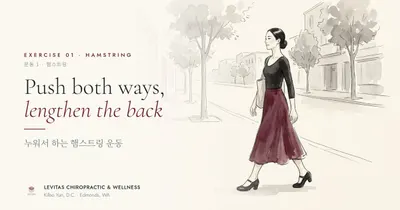
Exercise 01: The Supine Hamstring Hold. The knee and hands push against each other so the back of the thigh lengthens while the rest of the leg holds still.
운동 1: 누워서 하는 햄스트링 운동. 무릎과 손이 서로 밀어 버티며, 다리의 나머지가 제자리를 지키는 동안 허벅지 뒤를 늘려요.
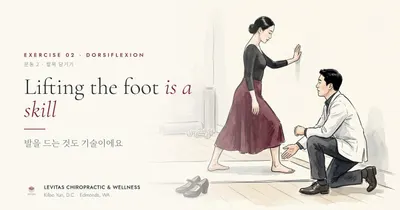
Exercise 02: The Seated Dorsiflexion Pull. Set the hips, arms and chest first, then train the foot to lift toward the shin, with a band for strength.
운동 2: 앉아서 하는 발목 당기기. 고관절과 팔, 가슴을 먼저 세우고, 발등을 정강이 쪽으로 드는 힘을 밴드로 길러요.
If your ankle has been talking to you for more than a few weeks and something here sounded like your story, it's worth looking at the whole leg, not just the spot that hurts. Bring the shoes you spend the most time in. Thanks for reading. If you have a question about your own ankle, ask us in the comments or send a message.
발목이 몇 주째 신호를 보내고 있고, 이 글에서 내 이야기 같은 부분이 있으셨다면, 아픈 자리만이 아니라 다리 전체를 한번 봐야 할 때입니다. 평소 가장 많이 신는 신발을 신고 오세요. 읽어 주셔서 감사합니다. 내 발목에 대해 궁금한 점은 댓글이나 메시지로 편하게 물어보세요.
View the full brochure · 브로셔 전체 보기