Quick answer · 짧은 답
Spinal curves are normal, but they do not return energy the way a spring does. When load pushes them deeper, you lose the room a nerve needs and the height that lets force travel through you — and the body passes that cost downward, from the neck to the low back to the knees.
척추 커브는 정상이지만 스프링처럼 힘을 돌려주지는 않습니다. 하중이 커브를 더 깊게 밀면 신경이 지날 자리와, 힘이 몸을 타고 지나갈 키를 잃습니다. 그리고 몸은 그 값을 목에서 허리로, 허리에서 무릎으로 넘깁니다.
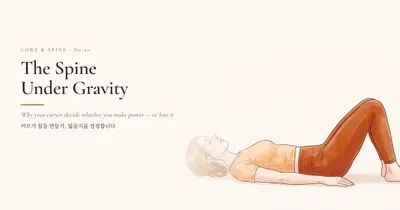
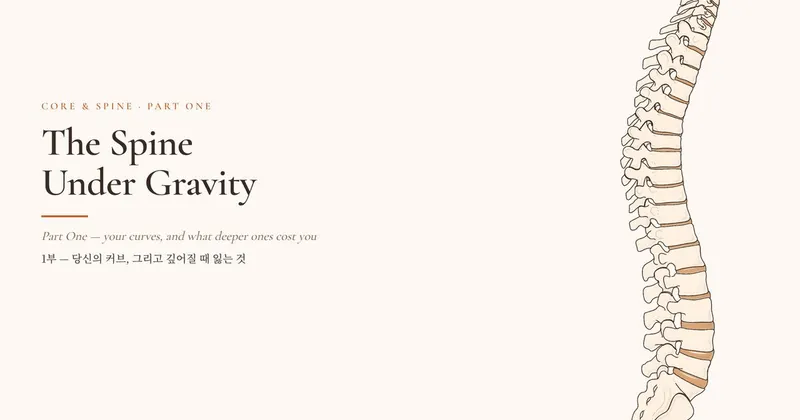
Your spine is not a straight column. Seen from the side it runs in three curves: the neck curves forward, the upper back curves backward, and the low back curves forward again. Those curves are normal. You were built with them.
옆에서 보면 척추는 일직선이 아니라 세 번 휘어 있습니다. 목은 앞으로, 등은 뒤로, 허리는 다시 앞으로. 이건 정상입니다. 원래 그렇게 만들어졌어요.
But the spine is not a spring
그런데 척추는 스프링이 아닙니다
People are often told the curves work like a spring — that they absorb shock and give the energy back. A spring does give it back. That is what makes it a spring.
커브가 스프링처럼 충격을 흡수한다고들 설명합니다. 스프링은 받은 힘을 돌려줍니다. 그래서 스프링이에요.
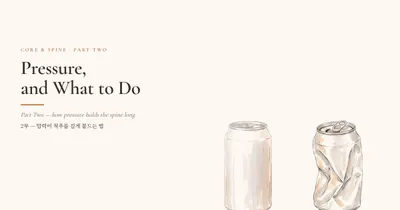
The spine does not. When load pushes the curves deeper, the energy does not come back out. It goes into the joints — into the facets at the back, into the discs, into the openings the nerves pass through. Nothing is returned. Something is spent.
척추는 돌려주지 않습니다. 무게가 실려서 커브가 더 깊어지면, 그 힘은 돌아 나오지 않고 관절로 들어갑니다. 뒤쪽 facet으로, disc로, 신경이 빠져나가는 구멍으로. 돌려받는 건 없고, 쓰이기만 합니다.
Deeper curves cost you twice
커브가 깊어지면 두 가지를 잃습니다
You lose room. Where the curve deepens, the back of the spine closes down. The facets press together. The opening a nerve has to pass through gets smaller.
자리를 잃습니다. 커브가 깊어진 쪽은 척추 뒤가 닫힙니다. facet끼리 눌리고, 신경이 지나가는 구멍이 좁아집니다.
You lose height, and with it, power. A folded column is shorter than a straight one. Force travelling up from the floor has to turn a corner at every fold, and some of it never arrives.
키를 잃고, 같이 힘도 잃습니다. 접힌 기둥은 곧은 기둥보다 짧습니다. 바닥에서 올라온 힘이 접힐 때마다 방향을 꺾어야 하고, 그러다 일부는 끝까지 가지 못합니다.
That is why a deep curve shows up as two things at once: discomfort, and the feeling that you cannot get your strength out.
그래서 커브가 깊어지면 두 가지가 같이 옵니다. 불편한 느낌, 그리고 힘이 안 나오는 느낌.
Extension is the easy direction
몸은 쉬운 쪽으로 갑니다
Your low back already curves forward. That means arching further is the direction it does best. So when you lift something, reach for something, or just stand tired at the end of the day, your low back goes where it is easiest. It arches.
허리는 이미 앞으로 휘어 있습니다. 그 말은 더 젖히는 방향이 가장 잘 되는 방향이라는 뜻입니다. 그래서 뭘 들 때, 손을 뻗을 때, 하루 끝에 그냥 서 있을 때, 허리는 제일 쉬운 쪽으로 갑니다. 젖혀져요.
The body is not making a mistake. It is taking the cheapest path. But the cheapest path puts the load straight onto the back of the spine, over and over.
몸이 실수하는 게 아닙니다. 제일 싼 길로 가는 거예요. 그런데 그 싼 길이 하중을 척추 뒤쪽에 그대로, 반복해서 얹습니다.
And when the upper back rounds
등이 말리면 시선이 바닥을 향합니다
When the upper back rounds, your head and neck travel forward and the neck's own curve flattens — a straight neck. Here is the part that matters: with the neck straightened and the head out in front, your eyes would be pointing at the floor.
등이 말리면 머리와 목이 앞으로 나가고, 목 커브는 펴집니다 — 일자목이죠. 그런데 여기가 중요합니다. 목이 펴지고 머리가 앞으로 나간 상태면, 눈은 바닥을 보게 됩니다.
You cannot live like that. Of everything your body is balancing, keeping your eyes on the horizon comes first — you need it to walk, to drive, to not fall. So the body pays whatever it has to pay to get your gaze back up.
그렇게는 못 삽니다. 몸이 맞추고 있는 것들 중에 앞을 보는 것이 제일 우선이에요. 걸어야 하고, 운전해야 하고, 넘어지면 안 되니까요. 그래서 몸은 시선을 다시 올리려고 어떻게든 값을 치릅니다.
A spine that accommodates gravity is not resisting it.
중력에 순응한 척추는, 중력에 저항하고 있지 않습니다.
And the bill moves down
그리고 청구서가 아래로 내려옵니다
First the neck pays. The small extensor muscles at the back of the neck tip the head back up so you can see where you are going. They were never built to hold that all day. They work without a break, they fatigue, and eventually they hurt — that tight, aching band across the base of the skull.
먼저 목이 냅니다. 뒷목의 작은 폄근들이 머리를 뒤로 젖혀 올립니다. 앞을 봐야 하니까요. 하루 종일 그걸 붙들고 있으라고 만들어진 근육이 아닙니다. 쉬지 않고 일하다 지치고, 결국 아파집니다. 뒤통수 아래가 띠처럼 뻐근하게 당기는 그 느낌이요.
When the neck can no longer pay, the bill moves down. The low back extends instead, leaning the whole trunk back to bring the head over the hips again. The lumbar curve deepens — not because you chose it, but because it is now paying for what happened above.
목이 더는 못 내면, 청구서가 아래로 내려갑니다. 이번엔 허리가 젖혀집니다. 몸통 전체를 뒤로 기울여서 머리를 다시 골반 위로 올리는 거예요. 허리 커브가 깊어집니다. 본인이 선택한 게 아니라, 위에서 생긴 일을 대신 갚고 있는 겁니다.
Then the pelvis tips forward with it. And once the pelvis tips, the line of weight through the hip moves. To stay balanced over your feet, the knees bend.
그러면 골반이 같이 앞으로 기울고, 고관절을 지나는 체중선이 옮겨집니다. 발 위에서 균형을 잡으려면 무릎이 구부러집니다.
Head forward, neck extended, low back arched, pelvis tipped, knees soft — every segment a little shorter than it should be, every joint loaded at an angle it was not meant to carry.
머리는 앞, 목은 젖혀지고, 허리도 젖혀지고, 골반은 기울고, 무릎은 굽어 있고. 마디마다 조금씩 짧아져 있고, 관절마다 원래 받게 되어 있지 않은 각도로 하중을 받고 있습니다.
So what do we actually want?
그럼 뭘 해야 할까요?
Not to erase the curves. You need them. What we want is for the curves to stop deepening under load — to control them, so the spine stays long instead of folding.
커브를 없애자는 게 아닙니다. 커브는 필요합니다. 우리가 원하는 건, 하중이 실렸을 때 커브가 더 깊어지지 않는 것입니다. 조절해서, 접히는 대신 길게 유지되는 것.
A longer spine resists gravity instead of accommodating it. And a spine that resists can pass force through: from the floor, through the feet and knees and hips, up the column, out through the hands.
길어진 척추는 중력에 순응하는 대신 저항합니다. 그리고 저항하는 척추는 힘을 통과시킬 수 있습니다. 바닥에서 발로, 무릎과 고관절로, 기둥을 타고 올라가, 손끝으로.
The question is how you hold a spine long without just stiffening everything. That is what the second half is about.
문제는 "어떻게"입니다. 온몸에 힘을 주고 굳히는 게 아니라면, 어떻게 길게 유지할 수 있을까요. 그 얘기를 두 번째 편에서 합니다.
View the full brochure · 브로셔 전체 보기