Quick answer · 짧은 답
Cold hands, a tight neck and posture that never sticks can share one switch: alarm mode, and where it leaves your spine (T1–L2).
차가운 손, 뻣뻣한 목, 오래 못 가는 바른 자세는 같은 스위치에서 나올 수 있어요. 뇌에서 시작하는 비상벨, T1–L2, 네 갈래 splanchnic nerve까지. 에드먼즈 리비타스 카이로프랙틱이 설명합니다.
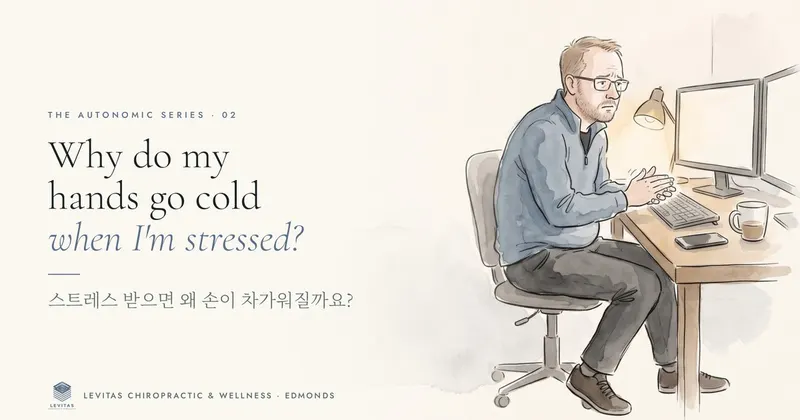
Right before a hard conversation, your palms get damp, your fingers go cold, and your heart thumps loud enough that you're sure the other person can hear it. Nobody is chasing you. You're sitting in a chair. Your body just hasn't gotten the memo.
어려운 대화를 앞두면 손바닥에 땀이 차고, 손끝이 차가워지고, 심장이 상대에게 들릴 만큼 쿵쾅거려요. 쫓아오는 사람도 없고, 그냥 의자에 앉아 있을 뿐인데요. 몸은 그걸 모르는 거예요.
That's alarm mode, the sympathetic nervous system. Today we look at where it starts, what it does, and why it can make posture and exercise harder than they should be.
이게 비상 모드, 교감신경(sympathetic nervous system)이에요. 오늘은 이 비상벨이 어디서 울리고, 몸에 무슨 일을 하고, 왜 자세 교정과 운동까지 어렵게 만드는지 볼게요.
Step 1 · The alarm starts in your brain
1단계 · 비상벨은 뇌에서 울려요
A smoke detector that can't tell toast from fire.
Deep in your brain sits the limbic system. One part of it, the amygdala, works like a smoke detector. It goes off before you've finished a thought. Next to it, the hypothalamus acts as a switchboard. It sends the order down your spinal cord to switch on alarm mode, and tells your adrenal glands to release stress hormones.
뇌 깊은 곳에 limbic system이 있어요. 그중 amygdala는 화재경보기 같아요. 생각을 다 끝내기도 전에 먼저 울려요. 바로 옆의 hypothalamus는 교환실이에요. spinal cord를 타고 비상 모드를 켜라는 명령을 내려보내고, adrenal gland에는 스트레스 호르몬을 내보내라고 해요.
A tense email, a bill, an argument in the car: each one gets the same response as a tiger. Adrenaline hits in seconds. Cortisol builds more slowly and can linger for hours, which is why you still feel wired long after the argument ends.
신경 쓰이는 이메일, 청구서, 차 안의 말다툼. 모두 호랑이를 만난 것처럼 반응해요. adrenaline은 몇 초 만에 퍼지고, cortisol은 천천히 차올라서 몇 시간씩 남아요. 말다툼이 끝나고 한참 지나도 몸이 곤두서 있는 이유예요.
Key point: Your body can't tell a deadline from real danger. Both set off the same alarm.
핵심: 몸은 마감과 진짜 위험을 구분하지 못해요. 둘 다 같은 비상벨을 울려요.
Step 2 · What the alarm does
2단계 · 비상벨이 켜지면
Cold hands, tight neck.
Alarm mode switches the whole body to emergency power in seconds. Your heart beats faster and harder, your airways open, your pupils widen, and your liver releases sugar for fuel. Anything that can wait gets turned down. Digestion stops, and your mouth goes dry.
비상 모드는 몇 초 만에 몸 전체를 비상 전원으로 돌려요. 심장은 더 빠르고 세게 뛰고, 숨길이 열리고, 눈동자가 커지고, 간은 연료로 쓸 당을 꺼내요. 급하지 않은 일은 꺼져요. 소화가 멈추고 입이 바싹 말라요.
Cold hands · 손이 차가운 이유
The skin can wait, so alarm mode squeezes the small blood vessels in your hands and sends that blood to your big muscles instead. It's the same system your body uses to keep warm on a cold day. Stress just borrows it.
피부는 급하지 않은 곳이라, 비상 모드는 손의 작은 혈관을 조이고 그 피를 큰 근육으로 보내요. 추운 날 체온을 지키려고 쓰는 바로 그 장치예요. 스트레스가 잠깐 빌려 쓰는 거죠.
Tight neck · 목이 뻣뻣한 이유
The body braces for trouble. When researchers measured the upper trapezius, the muscle on top of your shoulders, it worked harder under mental stress, even though people were just sitting at a screen. Hold that brace for months and your shoulders forget where down is.
몸은 위험에 대비해 버티는 자세를 잡아요. 어깨 위 근육인 upper trapezius를 측정해 보니, 그냥 화면 앞에 앉아 있었는데도 정신적 스트레스를 받을 때 더 많이 일했어요. 몇 달을 버티면 어깨가 내려가는 자리를 잊어버려요.
Key point: Cold hands and a tight neck aren't two separate problems. They come from the same switch.
핵심: 차가운 손과 뻣뻣한 목은 따로 생긴 문제가 아니에요. 같은 스위치에서 나와요.
Step 3 · Where the alarm lives
3단계 · 비상벨이 사는 곳
T1 to L2, right beside your spine.
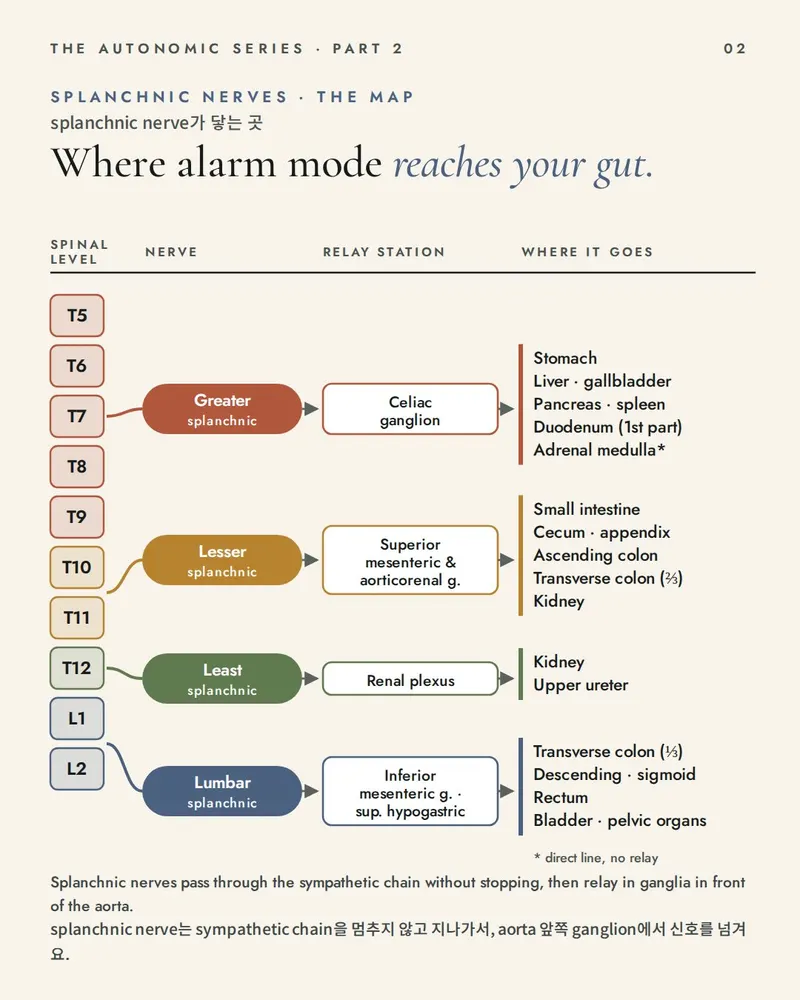
Alarm-mode nerves leave the spinal cord only from T1 to L2, your whole mid-back and the top of your low back. Right beside the spine they reach a string of relay stations called the sympathetic chain, running like a necklace down each side, just in front of where the ribs meet the vertebrae.
비상 모드 신경은 T1에서 L2 사이, 등 전체와 허리 위쪽에서만 spinal cord를 빠져나와요. 척추 바로 옆에서 sympathetic chain이라는 중계소 줄에 닿는데, 갈비뼈가 척추와 만나는 자리 바로 앞에 목걸이처럼 양쪽으로 늘어서 있어요.
The upper levels (about T1–T5) serve the head, heart and lungs. Your belly and pelvis are wired through four splanchnic nerves.
위쪽(대략 T1–T5)은 머리와 심장, 폐를 맡아요. 배와 골반은 네 갈래의 splanchnic nerve가 맡고요.
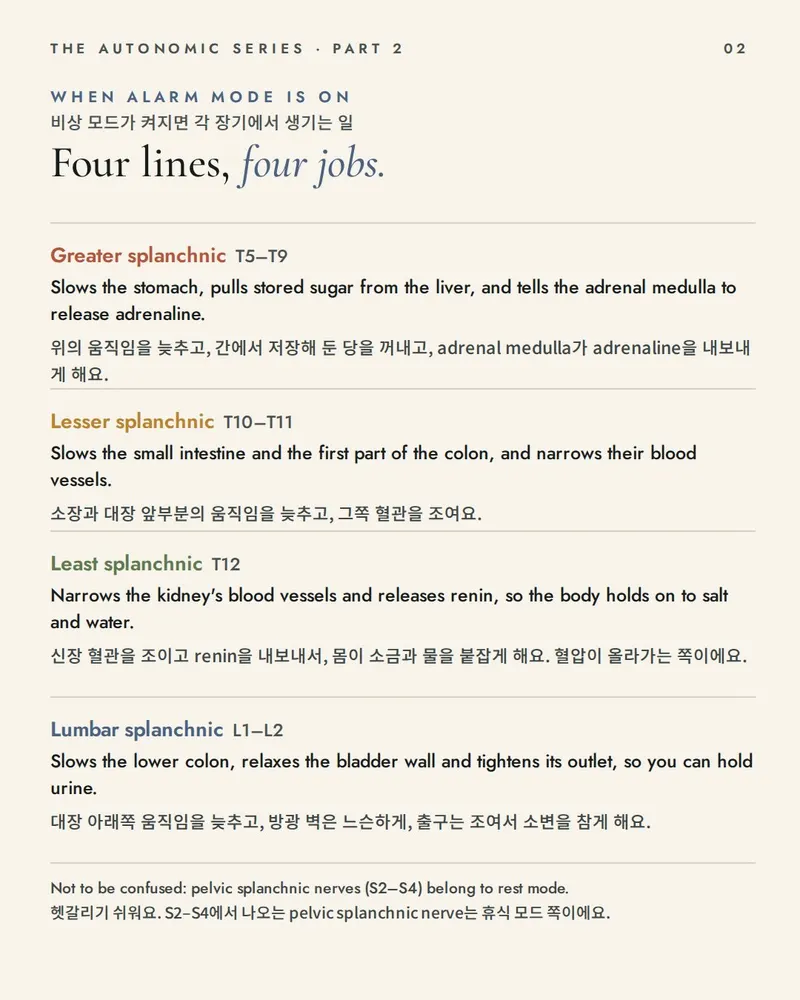
Greater (T5–T9) · stomach, liver, gallbladder, pancreas, spleen, plus a direct line to the adrenal medulla
Greater (T5–T9) · 위, 간, 쓸개, 췌장, 비장, 그리고 adrenal medulla로 가는 직통선
Lesser (T10–T11) · small intestine, first part of the colon, kidney
Lesser (T10–T11) · 소장, 대장 앞부분, 신장
Least (T12) · kidney
Least (T12) · 신장
Lumbar (L1–L2) · lower colon, rectum, bladder, pelvic organs
Lumbar (L1–L2) · 대장 아래쪽, 직장, 방광, 골반 장기
Key point: The stretch of spine that stiffens when you sit hunched all day is the same stretch your alarm system runs through.
핵심: 하루 종일 구부정하게 앉아 있을 때 굳는 그 척추 구간으로, 비상 모드 신경이 지나가요.
Step 4 · Why it doesn't stick
4단계 · 자세 교정이 잘 안 되는 이유
Posture needs a quiet alarm.
"Sit up straight." "Strengthen your core." You try, and it doesn't last. That's rarely a willpower problem. With the alarm on, your body is running a protection program.
"똑바로 앉으세요." "코어를 키우세요." 해 보는데 오래 안 가요. 대부분 의지 문제가 아니에요. 비상벨이 켜져 있으면 몸은 보호 프로그램으로 돌아가요.
01 Your muscles are already braced. You end up holding good posture with the same neck and shoulder muscles that are already working overtime. Thirty seconds later you slump, and you're more tired than before.
근육이 이미 버티고 있어요. 이미 초과근무 중인 목과 어깨 근육으로 좋은 자세를 붙잡게 돼요. 30초면 다시 구부정해지고, 오히려 더 지쳐요.
02 Your breathing moves up into your chest. Shallow, fast breaths recruit the neck muscles to lift the ribs. The diaphragm, which works with your deep core to support the spine from inside, does less.
숨이 가슴 위로 올라가요. 얕고 빠른 숨은 목 근육까지 동원해 갈비뼈를 끌어올려요. 속 코어와 함께 척추를 안에서 받쳐 주는 diaphragm은 일을 덜 해요.
03 Your brain picks safe over good. Pain research shows the nervous system changes how you move to protect you. It stiffens up, spreads the load and avoids certain directions. A brain busy guarding has a hard time learning a new movement.
뇌가 좋은 움직임보다 안전한 움직임을 골라요. 통증 연구를 보면, 신경계는 몸을 지키려고 움직이는 방식 자체를 바꿔요. 굳히고, 힘을 나눠 쓰고, 특정 방향은 피해요. 지키느라 바쁜 뇌는 새 동작을 잘 배우지 못해요.
04 Your body rebuilds in rest mode. Muscles don't get stronger during the workout. They rebuild while you rest and sleep. If the alarm keeps you awake at night, your effort pays off more slowly.
몸은 휴식 모드에서 다시 만들어져요. 근육은 운동하는 동안이 아니라 쉬고 자는 동안 강해져요. 비상벨 때문에 잠을 설치면 노력한 만큼 돌아오는 게 더뎌요.
In twelve years as a rehabilitation trainer, this was the pattern that taught me the most. The order matters.
재활 트레이너로 12년을 일하면서 가장 많이 배운 게 이거예요. 순서가 중요해요.
Key point: Posture and strength take hold once the alarm quiets down. Turn the alarm down first.
핵심: 비상벨이 잦아들어야 자세와 근력이 자리를 잡아요. 비상벨을 먼저 낮춰야 해요.
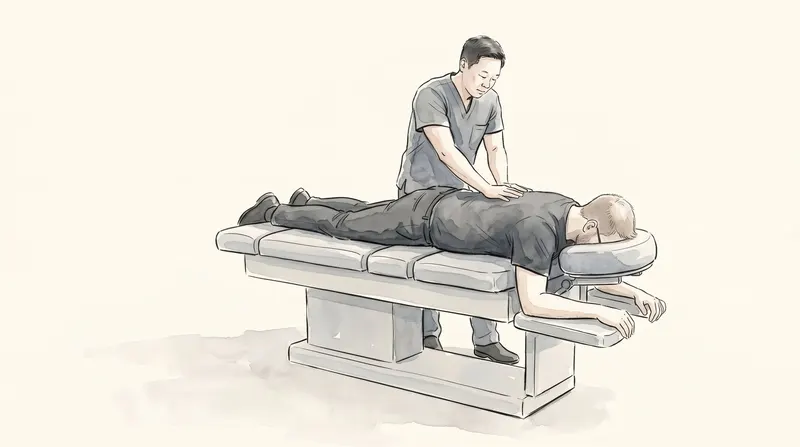
Step 5 · Why a chiropractor looks here
5단계 · 카이로프랙터가 여기를 보는 이유
Pain down, joints moving.
Every joint between T1 and L2 has sensors that report to the spinal cord. When a joint is stiff or painful, the report changes, and signals from the body's frame can nudge alarm-mode output up. These are called somato-sympathetic reflexes. Pain itself turns the alarm up too.
T1에서 L2 사이 관절마다 spinal cord로 보고하는 센서가 있어요. 관절이 뻣뻣하거나 아프면 보고가 달라지고, 몸의 뼈대에서 오는 신호가 비상 모드를 끌어올릴 수 있어요. 이걸 somato-sympathetic reflex라고 해요. 통증 자체도 비상벨을 올려요.
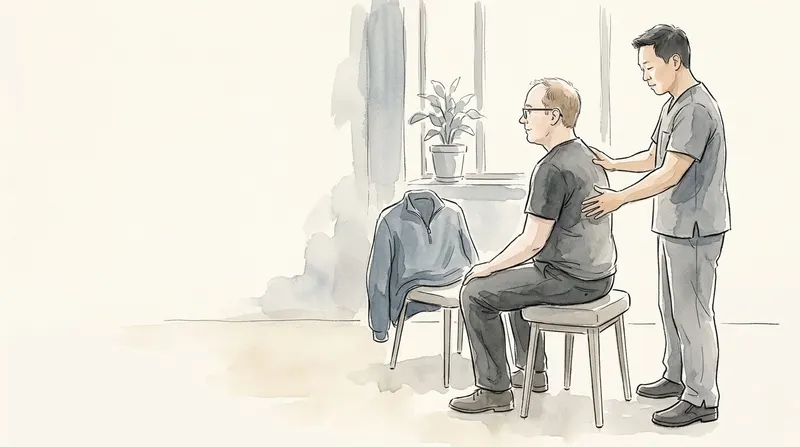
An adjustment gives a stuck joint its motion back, so that level sends the spinal cord a clearer report. Studies have measured changes in heart-rate patterns after adjustments, though results vary and most are short-term. So we won't promise a calmer nervous system. What we will do is get the pain down and make sure the stretch of spine your alarm runs through is moving the way it should.
교정은 걸려 있던 관절에 움직임을 돌려줘서, 그 높이에서 spinal cord로 가는 보고를 또렷하게 해 줘요. 교정 뒤 심박 패턴의 변화를 측정한 연구들이 있지만, 결과가 연구마다 다르고 대부분 짧게 이어져요. 그래서 신경이 차분해진다고 약속드리진 않아요. 저희가 하는 건, 통증을 내리고 비상 모드가 지나가는 척추 구간이 제대로 움직이게 하는 거예요.
Key point: We don't start with "stand up straight." We start by getting the pain down and the stuck joints moving.
핵심: 저희는 "똑바로 서세요"로 시작하지 않아요. 통증을 내리고 걸린 관절부터 움직이게 해요.
Step 6 · Try it today
6단계 · 오늘 해 볼 한 가지
The cyclic sigh.
Breathe in through your nose. At the top, take one more short sip of air. Then let it all out slowly through your mouth, longer than the breath in. Keep going for about five minutes.
코로 숨을 들이쉬어요. 꽉 찼다 싶을 때 한 번 더 살짝 들이쉬어요. 그리고 입으로 천천히 다 내쉬어요. 들이쉰 것보다 길게요. 5분쯤 이어 가요.
In a month-long study, people who did this five minutes a day reported a bigger lift in mood than people who practiced mindfulness for the same time, and their resting breathing slowed. It won't erase a hard month. It does give your body a way to hear "all clear."
한 달간 진행한 연구에서, 하루 5분씩 이렇게 숨 쉰 사람들은 같은 시간 명상한 사람들보다 기분이 더 좋아졌다고 답했고, 쉴 때 숨 쉬는 속도도 느려졌어요. 힘든 한 달을 지워 주진 않아요. 그래도 몸이 "이제 괜찮아" 신호를 들을 길은 열어 줘요.
Almost nobody comes to a chiropractic clinic because their hands are cold. They come because their mid-back aches by three in the afternoon. Put the two side by side and they turn out to share an address. If your hands go cold, your shoulders creep up and your mid-back tightens by afternoon, come in and we'll look at that stretch of your spine together. Clothes you can move in are all you need.
손이 차가워서 카이로프랙틱 클리닉에 오시는 분은 거의 없어요. 오후 3시만 되면 등이 뻐근해서 오시죠. 그런데 둘을 나란히 놓고 보면 사는 곳이 같아요. 손이 차가워지고, 어깨가 올라가고, 오후면 등이 굳는다면 한번 들러 주세요. 그 척추 구간을 같이 살펴봐요. 편하게 움직일 수 있는 옷이면 충분해요.
This series
이 시리즈 · 자율신경계
Part 1 Why Am I This Tired When I Haven't Done Anything? · 한 것도 없는데 왜 이렇게 지칠까요?
Part 2 Why Do My Hands Go Cold When I'm Stressed? · 스트레스 받으면 왜 손이 차가워질까요? (현재 글)
Part 3 Why Can't I Switch Off, Even When I Finally Lie Down? · 누워 있어도 왜 몸이 안 풀릴까요?
Levitas Chiropractic & Wellness
23700 Edmonds Way, Edmonds, WA 98026
levitaschiropractic.com · KakaoTalk 리비타스 카이로프락틱
We see patients in English and Korean. We accept PIP (auto injury), L&I (work injury), and cash pay.
한국어와 영어로 진료합니다. 자동차 사고(PIP), 산업재해(L&I), 현금 진료를 받습니다.
Book a visit · 예약하기
Kilbo Yun, D.C.
Doctor of Chiropractic
This article is general health information and does not replace individual diagnosis or treatment.
이 글은 일반적인 건강 정보이며 개별 진단이나 치료를 대신하지 않습니다.
References
McCorry LK. Physiology of the autonomic nervous system. Am J Pharm Educ. 2007;71(4):78.
Wehrwein EA, Orer HS, Barman SM. Overview of the anatomy, physiology, and pharmacology of the autonomic nervous system. Compr Physiol. 2016;6(3):1239–1278.
Ulrich-Lai YM, Herman JP. Neural regulation of endocrine and autonomic stress responses. Nat Rev Neurosci. 2009;10(6):397–409.
McEwen BS. Protective and damaging effects of stress mediators. N Engl J Med. 1998;338(3):171–179.
Charkoudian N. Skin blood flow in adult human thermoregulation. Mayo Clin Proc. 2003;78(5):603–612.
Lundberg U, et al. Psychophysiological stress and EMG activity of the trapezius muscle. Int J Behav Med. 1994;1(4):354–370.
Hodges PW, Tucker K. Moving differently in pain: a new theory to explain the adaptation to pain. Pain. 2011;152(3 Suppl):S90–S98.
Sato A, Sato Y, Schmidt RF. The impact of somatosensory input on autonomic functions. Rev Physiol Biochem Pharmacol. 1997;130:1–328.
Picchiottino M, et al. The acute effects of joint manipulative techniques on markers of autonomic nervous system activity. Chiropr Man Therap. 2019;27:17.
Balban MY, et al. Brief structured respiration practices enhance mood and reduce physiological arousal. Cell Rep Med. 2023;4(1):100895.
View the full brochure · 브로셔 전체 보기