Quick answer · 짧은 답
Tired all day, wide awake at night? Meet your autonomic nervous system, why its wiring runs along your spine, and one breath to try tonight.
낮엔 녹초인데 밤엔 말똥말똥하다면? 비상 모드와 휴식 모드, 척추를 따라 지나가는 자율신경, 오늘 밤 해 볼 호흡법까지 쉽게 풀었어요. 에드먼즈 리비타스 카이로프랙틱이 설명합니다.
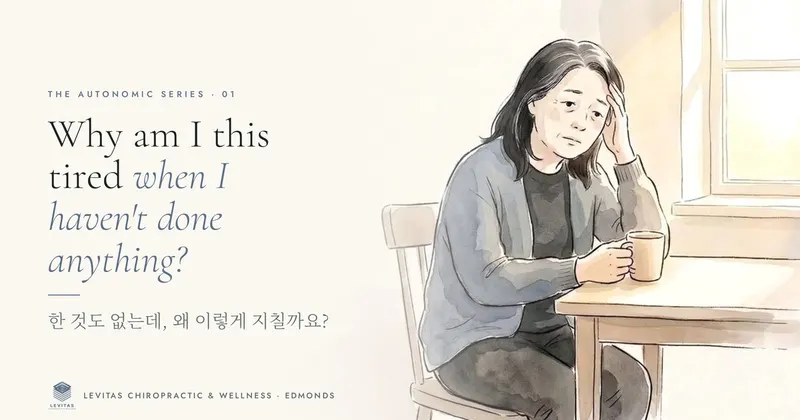
You slept. You haven't run anywhere. And by ten in the morning you already feel like you've worked a full day. The reason often lives in a part of you that never clocks out.
잠도 잤고, 뛰어다닌 것도 없어요. 그런데 오전 10시만 돼도 하루 일을 다 한 것처럼 지쳐요. 그 이유는 한 번도 쉬지 않는 내 몸의 한 부분에 있는 경우가 많아요.
Think about this morning. You woke up and your heart was already going. You didn't start it. You didn't set the pace. Somewhere between the alarm clock and your first cup of coffee, your pupils narrowed against the light, your stomach started on last night's dinner, and your blood pressure rose just enough to keep you from getting dizzy when you stood up. Nobody asked you about any of it.
오늘 아침을 떠올려 보세요. 눈을 떴을 때, 심장은 이미 뛰고 있었어요. 내가 켠 것도 아니고 속도를 정한 것도 아니죠. 알람이 울리고 커피 한 잔 마시기까지, 눈동자는 햇빛에 맞춰 작아졌고 위는 어젯밤 먹은 걸 소화하고 있었어요. 침대에서 일어날 때 어지럽지 않도록 혈압도 딱 필요한 만큼 올라갔고요. 이 중에 나한테 물어보고 한 건 하나도 없어요.
That quiet crew has a name: the autonomic nervous system. "Autonomic" just means automatic. It's the part of your nervous system that runs the body while you're busy living in it.
이 팀의 이름이 자율신경계(autonomic nervous system)예요. '자율'은 말 그대로 알아서 한다는 뜻이에요. 내가 하루를 사는 동안 뒤에서 몸을 대신 챙겨 주는 신경이에요.
Try to slow your heart down just by thinking about it. Try to make your stomach digest faster. You can't, not directly. Now lift your hand. Easy.
생각만으로 심장을 천천히 뛰게 해 보세요. 위한테 소화를 더 빨리 하라고 시켜 보세요. 안 되죠. 이번엔 손을 들어 보세요. 바로 되잖아요.
Lifting your hand is a job for the nerves you control. Heartbeat, digestion, sweat, the size of your pupils: those belong to the autonomic side. It works like the building manager of an apartment complex. You never see him, but the heat comes on, the water runs, and the hallway lights turn on when it gets dark.
손을 드는 건 내 뜻대로 움직이는 신경이 해요. 심장 박동, 소화, 땀, 눈동자 크기는 자율신경 쪽 일이고요. 아파트 관리소장님 같은 거예요. 얼굴 볼 일은 거의 없지만, 겨울이면 난방이 들어오고 물이 나오고 해가 지면 복도 불이 켜지잖아요.
You only notice the manager when something stops working.
관리소장님 존재는 뭔가 고장 났을 때 비로소 알게 돼요.
Step 1. Alarm Mode and Rest Mode
1단계. 비상 모드와 휴식 모드
The autonomic system works in two modes.
자율신경은 크게 두 가지 모드로 움직여요.
The sympathetic side is alarm mode. Picture your ancestor turning a corner and finding a tiger. In a split second the heart pounds, the airways open wide, the pupils grow to let in more light, and blood rushes to the legs. Digestion stops cold. Why digest lunch when you might be lunch? This is the "fight or flight" response, and it has kept people alive for a very long time.
교감신경(sympathetic)은 비상 모드예요. 아주 먼 옛날, 모퉁이를 돌았는데 호랑이가 서 있다고 생각해 보세요. 눈 깜짝할 사이에 심장이 쿵쾅거리고, 숨길이 활짝 열리고, 눈동자는 빛을 더 받으려고 커지고, 피가 다리로 쏠려요. 소화는 그 자리에서 멈춰요. 내가 호랑이 점심이 될 판에 내 점심 소화할 여유는 없잖아요. 이게 '싸우거나 도망치기(fight or flight)' 반응이고, 인류는 이 덕분에 지금까지 살아남았어요.
The parasympathetic side is rest mode. It takes over when you feel safe. The heart settles, the stomach gets back to work, saliva flows, and the body starts repairing what the day wore down. That heavy, pleasant feeling after a warm Sunday lunch is rest mode doing its job.
부교감신경(parasympathetic)은 휴식 모드예요. 안전하다고 느낄 때 나서요. 심장이 차분해지고, 위가 다시 일하고, 침이 돌고, 하루 동안 닳은 곳을 몸이 스스로 손보기 시작해요. 일요일 오후 따뜻한 밥 먹고 나서 몸이 노곤해지는 그 느낌, 그게 휴식 모드가 제 일을 하고 있는 거예요.
Here's the part most people don't know. Rest mode is quietly on right now, even as you read this. Left completely alone, your heart's built-in pacemaker would run at around 100 beats a minute. Your resting pulse sits lower because the vagus nerve keeps gently slowing it down, every second of the day.
많이들 모르는 사실이 하나 있어요. 지금 이 글을 읽는 순간에도 휴식 모드는 조용히 켜져 있어요. 심장을 그냥 내버려 두면 자체 박자로 1분에 100번쯤 뛰어요. 가만히 쉴 때 맥박이 그보다 낮은 건, vagus nerve가 하루 종일 살살 속도를 늦춰 주고 있어서예요.
So this isn't an on/off switch. Both modes are always a little on, and the body keeps turning one up and the other down all day. That shift happening smoothly is what health looks like.
그러니까 켜고 끄는 스위치가 아니에요. 두 모드 모두 늘 조금씩 켜져 있고, 몸은 하루 종일 상황 따라 한쪽을 올리고 다른 쪽을 내려요. 그 전환이 부드럽게 되는 것, 그게 건강한 상태예요.
| Same organ | Alarm · Sympathetic | Rest · Parasympathetic |
|---|---|---|
| Heart | Beats faster · 빨리 뛰어요 | Slows down · 느려져요 |
| Airways | Open wide · 활짝 열려요 | Ease back · 평소로 돌아와요 |
| Pupils | Get bigger · 커져요 | Get smaller · 작아져요 |
| Stomach & gut | Pause · 멈춰요 | Get to work · 다시 일해요 |
| Saliva | Dries up · 입이 말라요 | Flows · 침이 돌아요 |
| Bladder | Holds on · 참아요 | Lets go · 비워요 |
Step 2. Where the Wiring Runs
2단계. 전선은 어디로 지나갈까
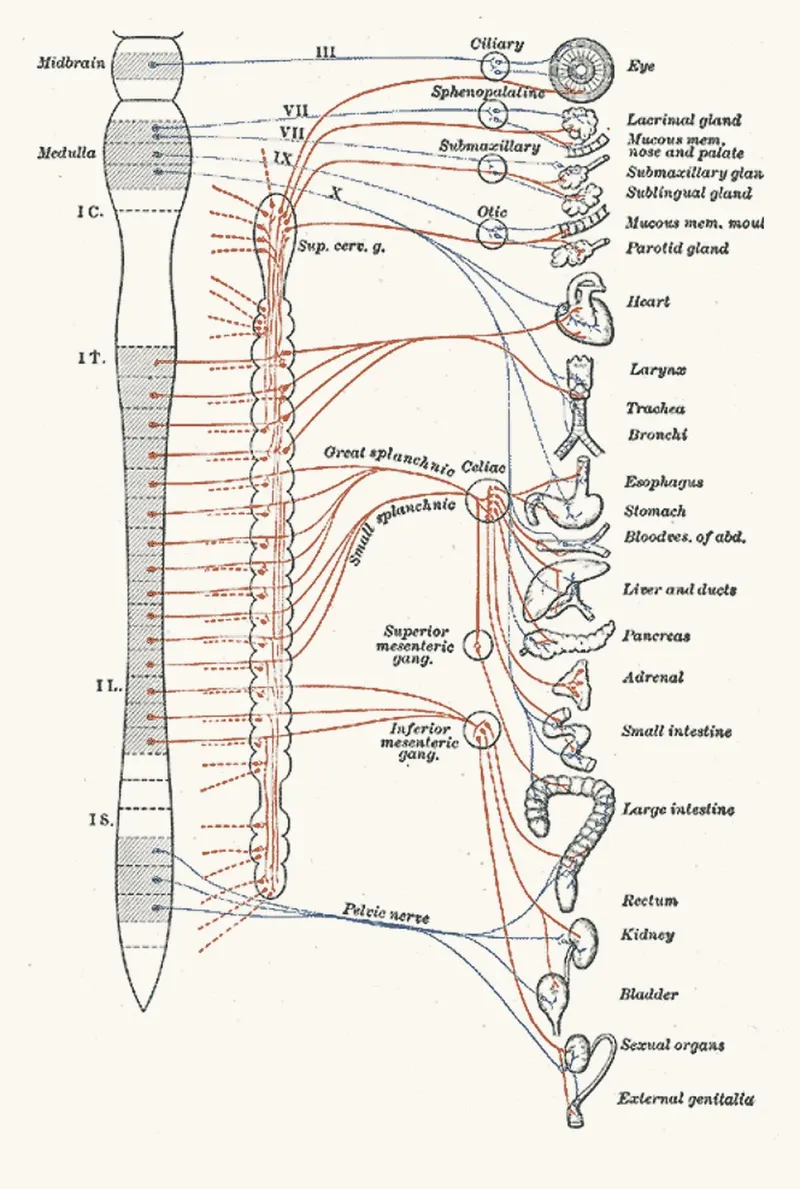
Every building has a wiring shaft, a column where the cables run floor to floor. Your body has one too. It's your spine.
건물마다 전선이 층층이 지나가는 배선 통로가 있잖아요. 우리 몸에도 있어요. 바로 척추예요.
Alarm mode leaves the spinal cord from the mid-back to the upper low back, roughly T1 through L2. From there the nerves pass a chain of relay stations sitting right alongside the spine before heading out to the heart, lungs, gut and blood vessels.
비상 모드 신경은 등 한가운데부터 허리 위쪽까지, 대략 T1–L2 사이의 spinal cord에서 나와요. 그러고는 척추 바로 옆에 줄지어 있는 중계소(sympathetic chain)를 거쳐 심장, 폐, 장, 혈관으로 뻗어 나가요.
Rest mode comes from the two ends. At the top, four cranial nerves carry it: III (oculomotor) narrows the pupils, VII (facial) keeps tears and saliva flowing, IX (glossopharyngeal) adds more saliva, and X (vagus) travels all the way down to the heart, lungs and most of the gut. At the bottom, S2–S4 look after the bladder, the lower bowel and the pelvic organs.
휴식 모드 신경은 양 끝에서 나와요. 위쪽은 cranial nerve 네 개가 맡아요. III(oculomotor)은 눈동자를 작게 하고, VII(facial)은 눈물과 침이 돌게 하고, IX(glossopharyngeal)도 침을 보태요. X(vagus)는 심장과 폐, 장 대부분까지 길게 내려가고요. 아래쪽 S2–S4는 방광과 아래쪽 장, 골반 장기를 맡아요.
I spent more than twelve years as a rehabilitation trainer before I became a chiropractor, and one thing kept showing up: people who carried their stress in their upper back and neck usually carried it in their sleep and their stomach too. At the time I didn't have the map. Now I do. The same column that holds you upright is the one the wiring runs through. That's why a chiropractor pays attention to it.
저는 카이로프랙터가 되기 전에 12년 넘게 재활 트레이너로 일했어요. 그때 자꾸 눈에 걸리던 게 있었어요. 등 위쪽이랑 목에 스트레스를 이고 사는 분들은 대개 잠이랑 속도 같이 안 좋았어요. 그땐 이유를 몰랐는데 지금은 지도가 보여요. 나를 똑바로 세워 주는 그 기둥 안으로 전선이 지나가요. 카이로프랙터가 척추를 들여다보는 이유가 거기 있어요.
Step 3. Why a Chiropractor Cares
3단계. 카이로프랙터가 이걸 중요하게 보는 이유
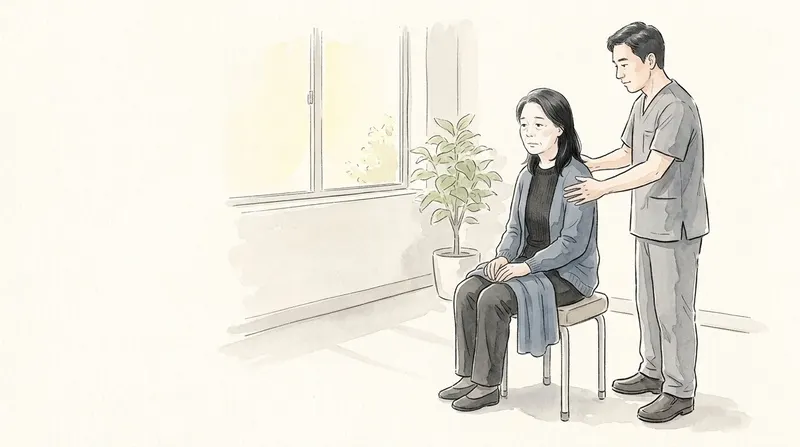
When chiropractic began in 1895, its founders gave a name to everything you've read so far: innate intelligence. The idea was simple. Your body already knows how to run itself, how to close a cut and slow a racing heart, and it does that work through the nervous system. The chiropractor's job was never to add something from outside. It was to clear the way so the body could do what it already knows.
1895년 카이로프랙틱이 처음 시작될 때, 지금까지 읽으신 이 모든 것에 이름이 붙었어요. innate intelligence, 몸이 타고난 지혜예요. 생각은 단순했어요. 몸은 스스로를 운영하는 법을 이미 알고 있어요. 베인 상처를 아물게 하고, 두근대는 심장을 가라앉히는 법을요. 그리고 그 일을 신경계를 통해서 해요. 그래서 카이로프랙터의 일은 밖에서 뭔가를 더하는 게 아니었어요. 몸이 원래 아는 일을 할 수 있게 길을 터 주는 거였죠.
Today we'd use different words. Physiologists call it self-regulation, and the autonomic nervous system sits at the center of it. The name is old. The observation still holds: your body does an enormous amount of work without you, and it does that work through nerves.
요즘은 다른 말을 써요. 생리학에서는 자기 조절(self-regulation)이라고 부르고, 그 한가운데에 자율신경계가 있어요. 이름은 오래됐어도 관찰은 그대로예요. 몸은 나 없이도 엄청난 일을 해내고, 그 일은 신경을 타고 이뤄져요.
So why an adjustment? Every joint in your spine is packed with sensors that report to the spinal cord how it's moving. When a segment stops moving well, that report changes. And it lands in the same stretch of spinal cord where alarm-mode nerves leave, T1 to L2, while the upper neck sits just below the spot where the vagus nerve leaves the skull. Researchers call these links somato-autonomic reflexes: what happens in the body's frame can nudge what the autonomic system does.
그럼 왜 교정일까요? 척추 마디마디에는 지금 어떻게 움직이는지 spinal cord에 보고하는 센서가 빽빽하게 들어 있어요. 한 마디가 제대로 안 움직이면 그 보고 내용이 달라져요. 그런데 그 신호가 들어가는 자리가 하필 비상 모드 신경이 나오는 T1–L2 구간이에요. 위쪽 목은 vagus nerve가 두개골을 빠져나오는 자리 바로 아래에 있고요. 연구자들은 이런 연결을 somato-autonomic reflex라고 불러요. 몸의 뼈대에서 일어나는 일이 자율신경을 살짝 움직일 수 있다는 뜻이에요.
An adjustment gives a stuck segment its motion back, and that changes what those sensors report. Studies have measured shifts in heart-rate patterns after spinal adjustments. The research is still growing, and the changes seen so far tend to be short-term. What we can say is this: a spine that moves well sends your nervous system clearer information, and that gives your body's own regulation a better place to work from.
교정은 걸려 있던 마디에 움직임을 돌려주고, 그러면 센서가 보내는 보고도 달라져요. 척추 교정 뒤 심박 패턴이 달라지는 걸 측정한 연구들이 있어요. 아직 연구가 쌓이는 중이고, 지금까지 확인된 변화는 대개 짧게 이어지는 편이에요. 그래서 이렇게 말씀드려요. 잘 움직이는 척추는 신경계에 더 또렷한 정보를 보내고, 그만큼 몸이 스스로 조절할 바탕이 좋아져요.
That's the heart of what we do. We find where the frame has stopped moving and give it back its motion. The body takes it from there.
저희가 하는 일이 바로 그거예요. 뼈대가 어디서 멈췄는지 찾아서 움직임을 돌려 드리는 것. 그다음은 몸이 알아서 해요.
Step 4. Signs to Notice
4단계. 내 몸이 보내는 신호
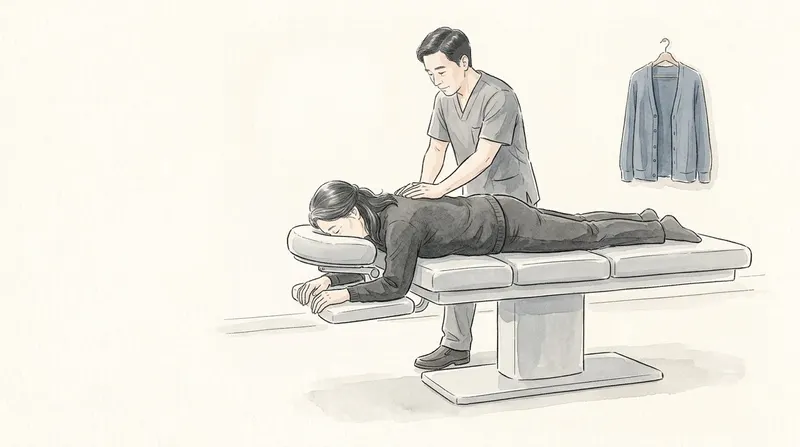
Modern life rarely sends a tiger. It sends a deadline, a traffic jam, a phone that buzzes at 11 p.m. The body can't tell the difference. It sounds the alarm either way, and when the tigers never stop coming, the alarm stops switching off.
요즘은 호랑이가 나오진 않아요. 대신 마감이 오고, 차가 막히고, 밤 11시에 휴대폰이 울려요. 몸은 그 차이를 몰라서 똑같이 비상벨을 울려요. 호랑이가 끝도 없이 나타나면, 결국 비상벨이 꺼지질 않아요.
Some signs the alarm may be stuck on:
비상벨이 켜진 채로 있을 때 흔히 보이는 신호들이에요.
- You're exhausted at night, but the moment your head hits the pillow your mind switches on.
밤엔 녹초인데, 베개에 머리만 닿으면 정신이 말똥말똥해져요.
You eat and it sits in your stomach like a stone.
밥을 먹으면 명치에 돌이 얹힌 것 같아요.
Your shoulders are up near your ears and you only notice when someone points it out.
어깨가 귀 근처까지 올라가 있는데, 누가 말해 줘야 알아채요.
You catch yourself clenching your jaw or holding your breath at the computer.
- 컴퓨터 앞에서 이를 꽉 물거나 숨을 참고 있는 나를 발견해요.
None of these is a diagnosis. They're signs worth a look. And if a racing heart ever comes with chest pain or fainting, that's an emergency, not a sign. Call 911 first.
이 중 어느 것도 진단은 아니에요. 한번 들여다볼 신호예요. 다만 가슴 통증이나 실신이 두근거림과 같이 온다면, 그땐 신호가 아니라 응급 상황이에요. 바로 911에 전화하세요.
Step 5. One Thing to Try Tonight
5단계. 오늘 밤 해 볼 한 가지
There's one handle on this system you can reach on purpose: your breath.
이 시스템에서 내 뜻대로 잡을 수 있는 손잡이가 딱 하나 있어요. 숨이에요.
Tonight, lying in bed, breathe in through your nose for a slow count of four. Then let it out through your mouth for a count of six, like fogging up a cold window. Keep the out-breath longer than the in-breath. Do it for a few minutes. Don't force it.
오늘 밤 누워서, 코로 천천히 넷을 세며 들이마셔 보세요. 그리고 입으로 여섯을 세며 내쉬어요. 차가운 유리창에 입김 부는 느낌으로요. 내쉬는 숨이 들이쉬는 숨보다 길면 돼요. 몇 분만 해 보세요. 억지로 하지는 말고요.
A longer out-breath helps the vagus nerve turn rest mode up. Research on slow breathing shows it can shift heart rhythm toward the calmer, rest-mode pattern. It won't undo years of a stuck alarm in one night. It does remind your body how to settle.
내쉬는 숨이 길면 vagus nerve가 휴식 모드를 켜기 쉬워져요. 천천히 숨 쉬는 것만으로도 심장 리듬이 차분한 휴식 모드 쪽으로 옮겨 간다는 연구들이 있어요. 몇 년 동안 켜져 있던 비상벨이 하룻밤에 꺼지진 않겠죠. 그래도 몸이 가라앉는 법을 다시 기억하게 돼요.
Next time: alarm mode, up close. Why does stress make your hands cold and your neck tight? Part 2 is all about the sympathetic side.
다음 편: 비상 모드를 가까이서 들여다봐요. 스트레스 받으면 왜 손은 차가워지고 목은 뻣뻣해질까요? 2편은 교감신경 이야기예요.
A note from me
원장 노트
Most of the people I see don't come in talking about their nervous system. They come in because their neck won't turn or their back tightens up every afternoon. But when we talk longer, the same things come up: bad sleep, a stomach that's always a little off, a feeling that they can't quite come down. That's worth a look. If it sounds familiar, come in and we'll look at the whole picture together. Clothes you can move in are all you need.
진료실에 오시는 분들 중에 "자율신경 때문에 왔어요" 하시는 분은 거의 없어요. 목이 안 돌아가서, 오후만 되면 허리가 굳어서 오시죠. 그런데 얘기를 좀 더 나누다 보면 비슷한 말이 꼭 나와요. 잠을 설친다, 속이 늘 좀 안 좋다, 몸이 도무지 가라앉질 않는다. 그냥 넘길 얘기가 아니에요. 내 얘기 같다 싶으시면 한번 들러 주세요. 편하게 움직일 수 있는 옷이면 충분해요.
This series
이 시리즈 · 자율신경계
Part 1 Why Am I This Tired When I Haven't Done Anything? · 한 것도 없는데 왜 이렇게 지칠까요? (현재 글)
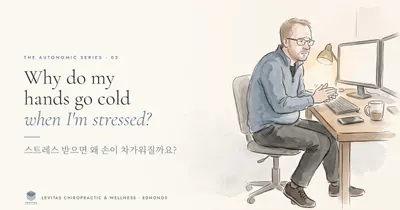
Part 2 Why Do My Hands Go Cold When I'm Stressed? · 스트레스 받으면 왜 손이 차가워질까요?
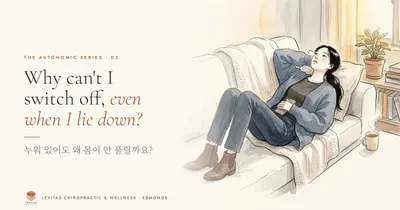
Part 3 Why Can't I Switch Off, Even When I Finally Lie Down? · 누워 있어도 왜 몸이 안 풀릴까요?
Levitas Chiropractic & Wellness
23700 Edmonds Way, Edmonds, WA 98026
levitaschiropractic.com · KakaoTalk 리비타스 카이로프락틱
We see patients in English and Korean. We accept PIP (auto injury), L&I (work injury), and cash pay.
한국어와 영어로 진료합니다. 자동차 사고(PIP), 산업재해(L&I), 현금 진료를 받습니다.
Book a visit · 예약하기
Kilbo Yun, D.C.
Doctor of Chiropractic
This article is general health information and does not replace individual diagnosis or treatment.
이 글은 일반적인 건강 정보이며 개별 진단이나 치료를 대신하지 않습니다.
References
- McCorry LK. Physiology of the autonomic nervous system. American Journal of Pharmaceutical Education. 2007;71(4):78.
- Wehrwein EA, Orer HS, Barman SM. Overview of the anatomy, physiology, and pharmacology of the autonomic nervous system. Comprehensive Physiology. 2016;6(3):1239–1278.
- Gordan R, Gwathmey JK, Xie LH. Autonomic and endocrine control of cardiovascular function. World Journal of Cardiology. 2015;7(4):204–214.
- Gibbons CH. Basics of autonomic nervous system function. Handbook of Clinical Neurology. 2019;160:407–418.
- Laborde S, Allen MS, Borges U, et al. Effects of voluntary slow breathing on heart rate and heart rate variability: a systematic review and a meta-analysis. Neuroscience & Biobehavioral Reviews. 2022;138:104711.
- Sato A, Sato Y, Schmidt RF. The impact of somatosensory input on autonomic functions. Reviews of Physiology, Biochemistry and Pharmacology. 1997;130:1–328.
- Picchiottino M, Leboeuf-Yde C, Gagey O, Hallman DM. The acute effects of joint manipulative techniques on markers of autonomic nervous system activity: a systematic review and meta-analysis of randomized sham-controlled trials. Chiropractic & Manual Therapies. 2019;27:17.
View the full brochure · 브로셔 전체 보기